Paleo

Recently I’ve been eating a Paleo based diet which has been working out pretty well for me.

When I say Paleo based I don’t mean strict Paleo. I’ve tried that previously and never found it sustainable.

The ‘strict’ way I managed 21 days. I ate only meat or eggs, veg and fat in the forms of nuts, oils and avacados. No dairy, fruit, carbs – even potatoes. It worked well – I lost weight, body fat, looked super lean. But it was hell. I was grumpy, craved everything and felt dizzy and weak frequently. It actually put me off trying a more relaxed form after the 21 days were up. But after trying IM fasting and deciding that wasn’t for me my trainer suggested I give Paleo another go, but this time trying his more flexible version.
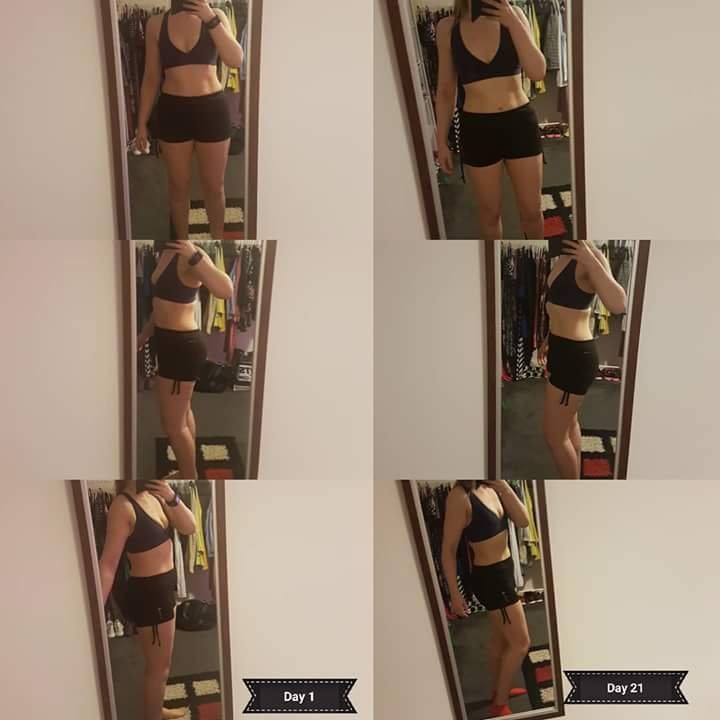
I did and now I’ve settled into eating a Paleo based diet for four days a week and then just eating sensibly the other three days.

Generally I eat Paleo Monday to Friday as my job means I’m office based these days and then I can have treats over the weekend when I’m out and about.

This Paleo means I eat:

  • Meat
  • Eggs
  • Veg
  • Potatoes in small quantities
  • Avacado
  • Nuts
  • Fruit
  • Almond or coconut milk

I also drink protein shakes to hit my protein targets.

I don’t eat:

  • Bread
  • Pasta
  • Rice
  • Sweets
  • Chocolate
  • Crisps
  • Refined sugar
  • Honey or syrups
  • Milk
  • Cheese
  • Yoghurt
  • Processed foods

The three main benefits of this are:

  • It’s easy to hit your protein target for the day
  • It’s hard to over eat and end up in a calories surpluss (in fact I frequently end up in a large deficit on these days)
  • It makes me feel less bloated and more energetic

On the other three days I still try and eat Paleo around 80% of the time but I will add in some other carbs and some treats to satisfy my sweet tooth. I still make sure I hit my protein target.

This means

  • Mentally I don’t feel like binging as much as I used to because I know I am ‘allowed’ foods I like every week
  • I make up some of the deficit built up earlier in the week whilst still not ruining my progress

I use this system to hit a 15-20% calorie deficit accross the week (a safe deficit) and to hit my protein target of 160g a day (2g protein per 1kg of body weight) without having to count calories or track macros obsessively.

It allows me to eat A LOT (my workmates will attest to how much I eat) and to eat a lot of good quality, tasty food with lots of colour and variety. I don’t need to rely on meal replacements or processed foods so much any more (which can make me feel sluggish). Added to drinking lots of water its an eating system that has left me feeling good (and lean).

It’s also a flexible enough system that if someone brings in Cosco Carrott cake (my drug of choice – one word – sugar!!!) to work on a Tuesday I can swap my Paleo days -enjoy some cake and just eat Paleo on Friday instead.

It won’t work for everyone and there’s lots if other ways of managing your eating out there that work for others but this is a flexible, safe and healthy option that is working well for me.
Feel the Fear and Do It Anyway

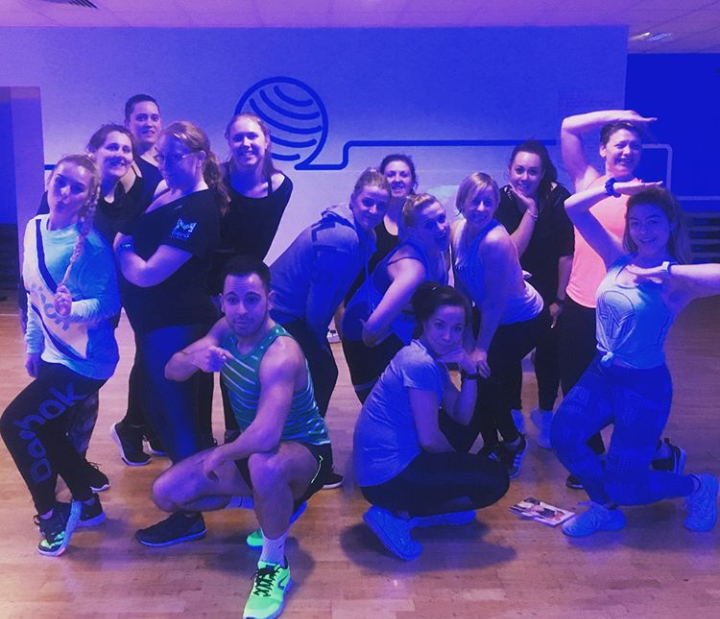
On Sunday I travelled down to London to do my Aim 1 (Advanced Instructor Module) in Sh’bam.

Now I can’t dance. I closely resemble a plank of wood attempting to move to the beat (I can hear what I’m supposed to be doing and when, I just struggle to make my body do it when it comes to dancing). So whilst I’ve done the equivalent courses already in Body Pump, Body Combat, CX Worx and GRIT and also my Aim 2 in Body Pump so knew what was coming, I was really really (really really really) nervous about this one.

Added to this, for personal reasons, I wasn’t in the best head space when Sunday arrived and my confidence and concentration was at an all time low.

I won’t go into the ins and outs of what you do on an Aim but in addition to teaching and getting feedback on this particular course you also learn about (and try) various different types of dance, which- in my case- meant spending the whole day trying things I’d never tried before (ballet, contemporary, Jazz…).

I will start by confirming that, as anyone who has ever met me would expect, I did not excel in any of the movements tried. I also managed to completely forget the choreography for my track about 10 seconds in the second time I taught and pretty much fell to pieces.

I spent much of the day feeling really quite uncomfortable.

But I’m glad I did it.

We all like doing things we are good at. We never mind trying things when we are confident they are going to go really well. That’s fine because even if you’re good at something, going on courses such as these and getting feedback can still improve you.

But although I was by far the least able person in the room on this occasion it was probably one of the most valuable Aims I’ve done. Regular readers will know I hate cheesey phrases like ‘step out of your comfort zone’ but on this occasion, this is what I was forced to do. Not just occasionally but for 9 hours straight! I gave so many things a go that just didn’t feel natural or comfortable or easy- and when my attempts went wrong I tried my best to laugh it off.

I will never be a ballerina but learning how to do things that scare you is a skill that can help you in all aspects of your life, not just the gym.

So if you think your rubbish at squats and so fear approaching the squat rack just go and do it. You might still be a bit rubbish afterwards but you’ll be giving yourself a chance to improve at the same time as reducing the mental block surrounding it.

If you want to learn to do a handstand, sod what people think and just start practicing – the worry about what you will look like is normally a lot worse than any kind of response you might actually receive.

I’ll sign off by saying a massive thank you to Laura Turner for putting up with me the whole day and not laughing at my attempts to dance and also all the other Sh’bammers for their encouragement and advice!

HIIT: What, Why, How


High Intensity Interval Training (HIIT) has been big in gym land for a while now.  Most people who train will have probably tried to incorporate some form of HIIT training into their programm

The main selling point to HIIT is it can provide maximum benefits in a relatively short time period.  It consists of short maximum effort bursts of work repeated with even shorter periods of rest in between.  Generally, a HIIT session would take no longer than 20 – 40 minutes and you can do almost any type of exercise depending on what your focus is that session.

Pros to HIIT training include:

  • Increased fitness – stamina, strength, endurance, agility etc.
  • Promotion of muscle growth due to the increased production of testosterone
  • Increased fat burn
  • Calorie burn not only during the workout but also for several hours after

With the rise of HIIT training within the gym it is natural that HIIT based classes have also become popular and are a great place to try this type of training out, so if you are thinking of trying a class here’s some pointers on what’s out there and what to expect:

  • The number of different options is huge! You could try Les Mills Grit Series, Beachbody’s Insanity, Mettafit, Virgin’s Twentyfour to name a few.  Most gyms will also have freestyle HIIT classes on their timetable (under the name of HIIT or Extreme Intervals or similar)
  • Many HIIT classes will be based around body weight exercises but not all will (Les Mills do a GRIT Plyo and GRIT Strength which used benches and barbells), I do HIIT Group Cycle classes.
  • They are designed to be hard and push you to your limit. People worry about going to classes that look ‘hard’ because they fear they will look unfit.  The truth is as you get fitter you should be pusher harder so the class should always feel ‘hard’.
  • Another truth is that nobody will be looking at you. It’s human nature to be a bit nervous about the potential embarrassment of doing something we might not be very good at but to be honest most people are too wrapped up in what they are doing to notice the person next to them!  I’ve seen someone slip (not badly, it’s ok!) as they were going for it during a class and not one person surrounding them so much as stopped what they were doing or looked over to them – they were concentrating on their workout- so you’d be surprised how unintimidating the classes are once you’ve got passed the initial walking into the room stage!
  • A final truth is that to get better at things you aren’t great at you have to actually do them. So no, you might not be able to nail every move the first time you try a class (and we are talking any class here) but you have to start somewhere to improve.
  • The classes are designed to push you to your edge – but they will be inclusive. When you start out a squat burpee tuck jump may not be attainable and body weight squats might be enough to push you to your limit.  With time and persistence, you will progress and whilst that progression happens the instructor will be able to provide you with options to push you.  Working to your limits is the aim – don’t compare yourself to anyone else.
  • Technique is key. Listen to the instructor and focus on execution of moves over speed – speed will come with time.  Results will come from doing moves well.

A final word of warning – Don’t over do it.  Studies have shown that HIIT has great benefits – however it also puts a reasonable amount of stress on your body so you ideally want to be aiming for no more than three HIIT sessions a week for maximum results.

  • If you take part in HIIT sessions four or more times a week your body will not have sufficient recovery time and you will start to negate the benefits
  • Excessive HIIT training can actually result in muscle loss and create hormonal imbalance – when the Central Nervous System gets stressed the production of testosterone can decrease and your body can start to store fat rather than loose it.
  • HIIT is hard so naturally there is a small increase in the risk of Injury the more you take part
  • Quick bursts of work can help improve stamina but if it is all you ever do it won’t help improve endurance much. A well balanced training plan with a variety of training methods will yield greater results.
  • Online coach Ricky Long (check him out on Instagram @rickylong42) suggests using HIIT a couple of times a week as part of your programme for 6-10 weeks followed by a couple of weeks away from HIIT, sticking to more steady state training to allow the body to replenish.

So ultimately- try HIIT but like everything in life don’t over do it and be sensible!

My brain may well be about to explode

Learning Releases

I’m going to be honest with you, if you don’t teach Les Mills programmes this will mean nothing to you.

In a nutshell, Les Mills programmes are pre choreographed.  Once a quarter we get a kit- a set of music, notes detailing the choreography and a DVD of that class being taught.  We get, give or take, two weeks to learn it.  I teach five programmes so have around 5 hours of choreography to learn.

The recommended launch date for teaching this new stuff is this Saturday so currently my brain can currently think of nothing else to write about here.  So this is what I’m going to write about today.

If you don’t teach and want to get a rough idea of the process read on.  If you do teach this might be familiar.

1 week before releases come out:

Heather’s brain “This quarter I’m going to be super organised, download my music straight away and learn one track a day”

The Day new releases come out:

Heather’s brain “I’ve got ages yet I’ll download it tomorrow”

Tomorrow:

Heather’s brain “Nope still ages yet.  Perhaps I’ll watch this documentary about paint drying and reorganise my kitchen cupboards instead”

One Week Later:

Heather’s brain “Hmmm everyone seems to know the new stuff perhaps I should start trying to commit this stuff to memory”

One hour after this:

Heather’s brain “Or I could have a nap instead”

The weekend before launches:

Heather’s brain “OK now I really need to start to learn this stuff” *degree of panic sets in- this is good – I learn better under pressure*

Starts trying to remember chorey:

Heather’s brain “I will NEVER EVER IN A MILLION YEARS BE ABLE TO DO THAT LUNGE TRACK”

Heather’s brain “I will NEVER EVER IN A MILLION YEARS BE ABLE TO REMEMBER ALL THIS”

Heather’s brain “Why can’t I hear any of the changes in biceps”

Heather’s brain “I hate this, why do I even put myself through this”

Heather’s brain “Perhaps I should have a nap”

Heather’s brain “What will really help me learn all this is eating my body weight in chocolate”

Heather’s brain “Why didn’t I start learning this sooner?”

Heather’s brain “Is that a 2/2 there or a 3/1?”

Heather’s brain “I AM SO STRESSED I THINK I’M HAVING A NERVOUS BREAKDOWN”

A couple of days before launch date:

Heather’s brain “OK I think it’s in there- I can do this”

Heather’s brain “Aaaaand now I can’t remember my current mix to teach tonight. FML”

Upon waking on Launch Day:

Heather’s brain “What’s a squat again?”

One hour before class:

Heather’s brain “I have no idea what any of the choreography is for this class”

Ten minutes before:

Heather’s brain “I have no idea what any of the choreography is for this class”

Music Starts:

Heather’s brain “Oh there you go I do remember”

After class:

Heather’s brain “Phew”

Heather’s brain “Next quarter I would be less stressed if I started learning stuff earlier”

1 week before releases come out:

Heather’s brain “This quarter I’m going to be super organised, download my music straight away and learn one track a day”

P.s. I will totally know all my stuff for this Saturday!

Body Combat for Beginners

One of the classes I teach is Les Mills Body Combat. This was the class that made me want to become an instructor so I really enjoy teaching it and always encourage gym members to give it a go.

I do get that it can be a bit intimidating for new people the first time they come to class. The moves are fast and the terminology can be confusing! But it’s also great fun and punching a kicking the days frustrations away can be incredibly satisfying!

If you are thinking about trying a class for the first time but are nervous and unsure of what to expect here’s a few things that I hope will help ease those uncertainties and allow you to have a great first experience:

  • It might sound obvious but tell the instructor you are new at the start- it will help you feel relaxed and they will be able to make sure you’re ok throughout the class and will make sure you have a good first experience.
  • There are three formats of the class- an hour class (10 tracks so sometimes it will be shorter as the length of a track can vary depending on intensity), a 45 minute class and a 30 minute class. The tracks in the shorter (express) versions are selected to still ensure you get maximum benefits from the class despite the shorter time frame.
  • Body Combat is mixed martial arts inspired. You will experience tracks based on a variety of martial arts throughout the class as well as incorporating some MMA (Mixed Martial Arts) training.
  • Don’t worry it’s non – contact. You will be punching and kicking an imaginary opponent or bag (so the air really!)
  • You don’t need any equipment – just you, your gym kit and trainers (and some water!)
  • The moves are choreographed to the music but don’t worry if you aren’t great at following a beat at first- you will still be getting your heart rate up even if you don’t get every combination of moves straight away. Following the music and combinations will get easier and when you do nail that combo to the beat you feel amazing!
  • You are mirroring the instructor’s movements. If they say right foot forward, they will put their left foot forward so if you imagine they are your reflection in a mirror and mirror their moves you will find you are soon putting your right foot forward without even having to think about it! Don’t worry if you new to group exercise we know this takes time to get used to!
  • Once they press play the instructor will generally not pause the music unless you need time to grab a mat. This is to keep the heart rate and intensity of the workout high. That doesn’t mean you can’t take a break if you need one- listen to your own body – the instructor won’t mind, just come back in when you are ready.
  • It is a tough cardio workout. You are going to burn calories. You will get out of breath- that’s ok it’s why you are there. If you need to take a break take one, grab some water and come back in when you are ready.
  • There are always opportunities to work within your own personal limits. The instructor will give different options throughout the workout to either dial the intensity up or down. So if you don’t want to jump there will always be a move you can do instead that doesn’t involve jumping but still provides lots of benefit. Equally the instructor will be able to guide you in how to improve a move to increase the intensity if you are ready to challenge yourself a bit more.
  • If you are new there is something called Smart Start. Effectively it means you are allowed to stay for a few tracks. When you feel like you have done enough you can leave (make sure you stretch before you leave the gym!) then each time you try the class, see if you can stay for one extra track until you can do the whole class. New exercise classes can be tough, we know that, but you don’t need to be put off from trying them because you aren’t sure you are ready for a full class yet.
  • There is a lot of terminology that may be unfamiliar – jab cross, uppercut, hook, roundhouse kick etc. It might take a while to remember what each move is but don’t worry you can watch the instructor throughout and over time you will start to take on board what each strike is so you can react quickly to cues.
  • When you strike imagine your opponent is your height! The instructor will tell you which body part to aim for with each strike – if you imagine the opponent is your height you will get the most effective workout. Possible.
  • It doesn’t matter if you can’t get your leg to head height when you kick (I certainly can’t!)! You will probably find as you attend more often your kicks will get higher, but the range of your kick will have a lot to do with your flexibility so don’t worry if you can’t kick as high as the person next to you – work within your own range of movement and just challenge yourself to kick a bit higher as time goes on.
  • If you have done martial arts training some of the moves may feel ‘wrong’. Some of the moves in Body Combat are modified to ensure they are safe and effective for a group exercise environment. It’s a martial arts inspired class – not a martial arts class.
  • Combat is an amazing core class. All the moves involve massive work through your core and your instructor will coach you how to effectively work the core throughout the class. So as well as burning lots of calories and increasing your CV fitness you will also find the workout does great things for your waist.
  • If you have a question about a move, go and chat to the instructor at the end of the class. We generally love talking to people and want you to get the most out of the class. If you aren’t sure if you are feeling a move ‘in the right place’ ask and we can spend a few minutes on your technique to ensure the following week you are confident you are getting the most out of that move / track / strike / kick.
  • Instructors get a new track list every three months- at which point they will teach this in it’s entirety for around 6 weeks. After that they will ‘mix’ older tracks into a playlist to keep it interesting for you and keep challenging your fitness levels until they get their next playlist. In other words – you won’t ever get bored.
  • Finally- it’s an exercise class and it’s meant to be fun. Don’t worry if you struggle with a move or aren’t great at certain kick- ultimately it’s all about moving and having fun whilst doing it so try not to take yourself too seriously.

My Guide to Body Pump

If you have ever looked into taking a class at your local gym chances are you will have seen Les Mills Body Pump on the timetable.

It is probably the most successful group exercise programme in existence. I love teaching it and still take it as a participant once a week.

Done regularly with challenging weights it will give you results.

Most people who want to lose weight / tone up do lots and lots of cardio. Cardio is good for you BUT you also need to do some resistance work to shape your body. Body Pump is great because it works the whole body in 30-60 minutes using a low to medium weight and a LOT OF REPS – all whilst moving in time with some good music. If you have never used a barbell before it is also a safe introduction into some basic lifts / moves.

However if you have never used weights before it can also feel a bit intimidating. I remember my first class and the confusion at everyone collecting lots of different sized plates and changing them quickly in between tracks and my bemusement at how everyone seemed to know what move was coming next!

So this is my ‘what you need to know’ guide to taking your first Body Pump class:

  • Arrive at least 10 minutes early and introduce yourself to the instructor so they can help you set up and so they know that you are new. This can help them tailor their teaching, ensuring you have a good first class.
  • Stick with light weights for your first couple of classes and concentrate on getting the hang of the tempos and the moves. Body Pump works because you are doing large numbers of reps, so whilst you want to use a challenging weight eventually, it’s ok to start off light – 3.75kg each side might be a good starting point for most.
  • The instructor will give you a guide of what to put on the bar at the start of each track (e.g. double the weight, take 1/3 off etc.). Listen carefully to this – they will normally give two options – one for regulars, one for new people but do not be afraid to stick with the same weight all the way through on your first class.
  • The structure of every class will always be the same:

60 minutes

  1. Warm up
  2. Squats
  3. Chest
  4. Back
  5. Triceps
  6. Biceps
  7. Lunges
  8. Shoulders
  9. Core
  10. Cool down

45 minutes

  1. Warm up
  2. Squats
  3. Chest
  4. Back
  5. Lunges
  6. Shoulders
  7. Core
  8. Cool down

30 minutes

  • Warm up
  • Squats
  • Chest
  • Back
  • Core

So when the whole class looks like they know what is coming they do for a reason- and after a couple of classes you will too!

  • Talking of continuity – we get a ‘new release’ every 3 months. So at that point, every instructor will teach this new set of tracks for 4-6 weeks. That is why when you do your first class some people will look like they know what is coming – they have probably done the track lots of times before! After about 6 weeks, the instructor will probably start to ‘mix’. This means they will bring back some older tracks to keep things interesting and keep your body reacting well to the class.
  • As a new member, you can take advantage of something called Smart Start. This means that if you want to try a few tracks (we suggest up to the back track) and then leave you can do. Leave your stuff out and the instructor will put it away at the end of class. Then next week you can stay for a couple of extra tracks, and a few more the week after until you can do a whole class. This is optional and you can stay for the whole class if you want, but it does provide an option to try the class out and build up week by week if you are new to exercise.
  • With Body Pump technique is more important than weight so don’t worry too much at first about what you are lifting – instead work on getting the moves. Doing them well will bring better results than just picking up a heavier bar!
  • The tempo is also really important in Body Pump. You will hear the instructor ask you to move at different tempos (3/1, 2/2, bottom half pulses). These aren’t just to make it more interesting. The different tempos help to work different muscle fibres and maximise your results so try to work with the instructors pace.
  • You aren’t moving or jumping (well occasionally you might be jumping but rarely!) but you will sweat and you will get out of breathe. Body Pump will burn calories as well as shaping your body.
  • Don’t be worried if you wake up the next day and climbing the stairs or tying your hair back hurts! This is your body reacting to new training and will pass in a few days. After a few classes your body will take less time to recover!
  • If you have done weights in the gym before you may be confused by a couple of the moves we do in Body Pump! Be aware that some moves (Deadlifts for instance) are modified for the studio environment. This is for safety reasons as a) we move at a fast tempo and b) the instructor needs to make sure a large group of people are all moving safely.

I hope that the above tips have made the idea of trying a class less daunting! If you do decide to give the class a go, I would love to hear your thoughts!