Possibly the most girly post I will even write – Re blog

A re-post of an old blog. Still one of the most common barriers I hear about so…

Most days I train three times a day: before work, lunchtime and after work. This means twice a day I shower and get ready for work in a gym changing room. I normally have 10- 20 minutes do do this so I’m pretty used to getting dressed fast (and I’m probably at the low maintenance end of low maintenance to be honest – if you’ve met me you have probably seen me without make up on and almost definitely on a day when I haven’t brushed my hair).

So when someone said they couldn’t train at lunchtime because they wouldn’t have time to shower etc. afterwards it got me thinking who else is put off by this and I decided to list my tips for a quick no frills routine which might help anyone who wants to train around work but is put off by the post sweat grooming issue!

  • Pack your bag the night before so you know you won’t forget anything. When I forget my bra or one shoe it’s always because I’ve packed in a rush that morning.
  • Buy a camping towel- a) they are lightweight and fold up small b) They dry quickly and don’t retain water so don’t make your gym bag wet and heavy after use
  • Pack a wash bag with all the things you will need and it leave in your gym bag at all times – this is less than you think: shower gel (or not – some gyms have those little shower gel dispensers in the showers), shampoo, moisturiser, deodorant, toothbrush and toothpaste – anything else just adds unnecessary time
  • Minimise your routine as much as you can – quick shower, 2 in 1 shampoo and conditioner – if you have to wash your hair (I’m not so much of a tomboy that I’d go as far as suggesting combined body and hair wash but to be fair it is an option)
  • Baby oil is great as moisturiser – makes your skin super soft but much quicker than a lotion as you can put it on whilst your skin is still wet
  • Baby wipes and dry shower gel (it exists- try Boots) are great cheats if you didn’t do too much cardio – you will know if you can get away with this or not on any given day (more often than not the answer is no but they are useful for emergencies none the less)
  • Dry shampoo is also your friend. As are high pony tails/ the scraped back / Croydon Facelift pony tail.
  • You actually need to wash your hair less often than you think even after training. Give it twenty minutes and it will dry out and won’t actually smell – I wash my hair maybe 2/3 times a week max.
  • Don’t waste time doing the towel dance. All women know what the towel dance is and quite frankly it’s a waste of time. A) Nobody is looking at you and b) you normally end up being naked and more exposed for longer whilst trying to put your knickers on balancing on one leg and holding a towel round you than if you just got dressed.
  • Whilst I’m at it – do not be one of those people who gets dressed in the shower- you will get your clothes wet and you are holding up the people waiting.
  • Pack clothes which don’t crease – I’m fond of lycra.
  • If you can get away with not wearing tights you will save at least five minutes- putting on tights when you’ve just exercised is almost as much exercise as taking your sports bra off after a session.
  • You don’t need to put on lots of makeup after a workout- keep it minimal and take advantage of the natural glow your skin will now have to speed up the process of putting on your make up
  • Get your eyebrows and eyelashes tinted if having a bare face isn’t an option – this will save valuable drawing on yourself time!
  • Work out what your gym has in the way of hairdryers – if they have them don’t pack one! I personally don’t blow dry my hair as it dries by itself in about 15 minutes but I’m led to believe that’s not usual.
  • Do you actually need to straighten your hair?

Getting ready for work is dull and should take as little time as possible anyway – don’t let it stop you from getting a workout in – life is too short.

Note: This is a bit of a blog for the girls really- I’m going to assume most men are pretty much wash and go anyway but if not please re-read the above!
First Day Back Pain

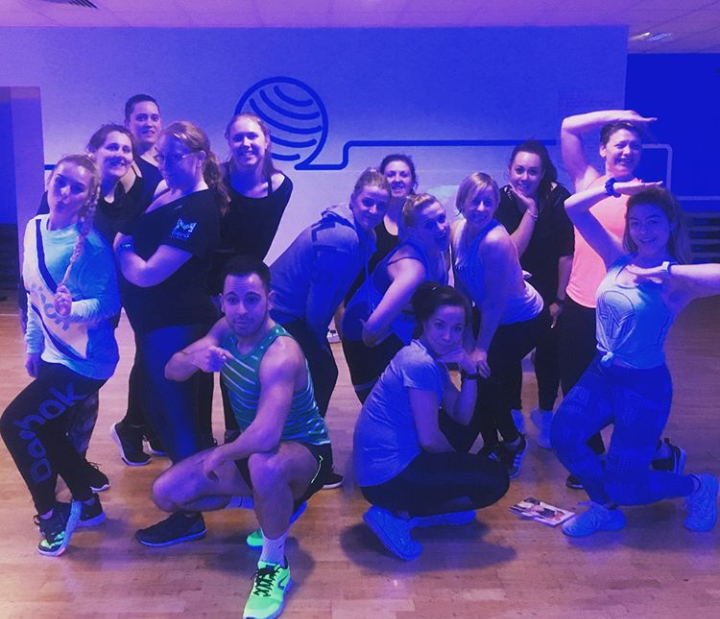
Today was my first time teaching a group exercise class for over 3 weeks.

Group Cycle.

I have trained over those thee weeks of course, but with much less intensity and frequency than normal.

Everyone in the class was in pretty much the same boat.  Everyone trains several times a week and did some exercise over Christmas but took their foot off the gas for a bit and had a well deserved rest.

We all hurt during hat class today!

Physically and mentally it felt tough great to be back but definitely a shock to the system.

To be honest by next week we will all probably be back to normal and whilst classes always feel hard we won’t feel like we did today (basically we all were pretty much ready to stop by the half way point!), because you don’t loose your fitness with a three week recovery.

My point.

If you are a regular class / gym goer heading back after the Christmas break don’t stress.  A break (whether it was total or a reduction to your normal routine) is good for you every now and then.  It can reignite your enjoyment and let your body recover and whilst the first couple of sessions back might feel hard ultimately performance can improve when you allow yourself adequate recovery time.  We all had a laugh today about how knackered e felt and adjusted our intensity to alow us to get the session done.

If you are new.  Hopefully what I’ve just said above will help you relax.  Those people you see in classes or the gym who know what they are doing – I can almost guarantee they will be struggling to get back to it after Christmas – so if you are exhausted 10 minutes into a class that’s ok – at this time of year you are honestly not on your own with that – even the instructors are feeling the same as you!

The other good bit of news is that just as getting back into the swing of things happens quicker than you think it will, so can starting to feel results when you first start.  Of course I am not suggesting that you’ll reach your goal within weeks – it does not work like that but will the things that at first make you feel impossible start to feel a bit more manageable within a few weeks? With a consistent approach yes.

To everyone coming back to classes / gym sessions / their normal routine this week do not beat yourself up about taking that break or feeling more knackered than normal in the first few sessions.

What to Expect from a Spin Class – Reblog

A blog from back in April last year but hopefully still useful for anyone thinking of starting these classes in 2019.

Group Cycle, often known as spin. There are other variations such as Les Millls RPM too.

One of the most inclusive classes in a gym.

Also the one that in my experience people are most scared to try.

I can see why- it looks tough (for good reason – it is) and everyone looks like they know what they’re doing (they don’t, honest) and it looks technical (you have to set up a bike – this was my biggest fear at first).

So if you’ve ever wondered about trying a class but aren’t sure if it’s for you here’s the low down (from my perspective) for first timers on how to get the most out of the class.

  • Everyone is welcome- all fitness levels. Yes it will be hard but you really can go at your own pace
  • Every instructor’s class is different. So if you don’t like mine try someone elses – there will be a style you like / format you enjoy / class with music you love out there- shop around! I sometimes teach rides where we work along to the music other times I teach HIIT style tabatta, some people do races and competitions. I won’t be offended if you try my class then I see you at someone elses next week!
  • One thing to note, trade marked classes such as Les Mills RPM will be similar in every gym / with every instructor. They are pre- choreographed and so you will always get the same format – even if you go to a class in a different country. This really suits some people, especially if you like routine.
  • Get there 10 minutes early and say hi to the instructor. Tell them you are new, tell them you are nervous. They will be nice, they will look out for you and they will show you how to set up your bike.
  • There will normally be modifications or different levels you can work at and the instructor will always offer these different options throughout the class- take the ones that suit you. Never tell yourself you are doing the easy option. They are just different and people take different options for all sorts of different reasons.
  • Put some resistance on the bike – going too light sounds like a good idea (especially when you feel like you are going to die half way through!) but it will mean you bounce – this will hurt your bottom, believe me. After my first class I walked like a cowboy for a week.
  • Always make sure your feet are strapped in – loose straps are dangerous. Dangerous is bad.
  • There is normally a brake on the resistance button. Normally by pressing down on it you can stop the feet dead. It’s useful to remember just in case! The instructor will tell you about the bike if you introduce yourself at the start.
  • Don’t be afraid to add resistance when asked to. If you add too much you can always take it off. You’re there to get fitter – challenging yourself is the way to do this. Noone will laugh if you get stuck!
  • Take water – you will sweat, you will get thirsty.
  • Maybe take a towel- I refer you back to the sweat!
  • Taking recoveries is fine. You are meant to work hard- if you push so hard you need to take a moment then well done. The instructor won’t shout at you – just sit on the bike, keep the legs spinning and come back in when you are ready.
  • When you are new it can seem like everyone else is faster and fitter than you. Remember they may have been doing this a long time and have conditioned themselves to last the full class. They will not have been like that in their first class so don’t beat yourself up. Try your best, try and enjoy it and just focus on giving your best effort. Nobody is there to compete with anyone else so just work at a level right for you. Nobody is going to judge you.
  • Cycle classes are meant to be hard- the great thing is as you get fitter you can go faster and heavier so it stays effective and never gets to the point it feels ‘easy’
  • Above all Group exercise is meant to be fun so relax and smile – the music and other people make it more interesting than just sitting on a bike in the gym!

“SMART START” What the new person needs to know – Group Exercise

  1. Nobody will be looking at you. You will find that everyone in classes will be focusing on themselves so you don’t need to be self conscious about what you are doing.
  2. It doesn’t matter if you have two left feet. If you are moving you will burn calories even if you go in the wrong direction or use the wrong foot first.
  3. You don’t have to do the whole class first time. If you aren’t sure you can do the whole class straight away speak to the instructor – we will be happy for you to give it a try and leave after a few tracks if that feels right for you – you can keep building up how you long you stay for over a few weeks.  Some exercise programmes have specific plans in place for this (for instance Les Mills have SMART START where you can build up how much of a class you do over a few weeks / classes)
  4. Classes tend to look more intimidating than they really are. If you look in on a class it will look like everyone is super fit and coordinated which can put some people off giving them a go.  In reality everyone works to their own fitness levels, limitations and for their own reasons so there is no set standard of fitness or ability required.
  5. There are always options. You don’t have to jump or run or do any particular exercise that you are not comfortable doing – the instructor will always give you alternatives and they will not make the class any less effective or less of a workout if you take them.
  6. Try to arrive early. Just five or ten minutes will do. That gives you time to get set up and speak to the instructor without rushing or getting stressed – this is especially important if it’s a Group Cycle class or Body Pump class (or any other class which requires equipment) as having the equipment set up right here can make the class a lot more enjoyable.
  7. Tell the instructor you are new. We try and look out for new faces but we don’t always manage to pick out everyone new in a busy class. When we know you are new to the class we can make sure you are set up, know what to expect, check for anything we might need to know to make sure we offer particular options that might help you.
  8. Class goers tend to be friendly. Everyone remembers the first class they went to and you’ll find people will be happy to help you set up or give you a hand during class if you need one and the instructor isn’t close by (still go introduce yourself to us though!). If your nervous just give someone a smile or a hello and they will more than likely start chatting.
  9. Take water. You will need it!
  10. Have fun. My favourite thing about group exercise is that an hour moving to music goes so much quicker than an hour in the gym.  Don’t worry about how good you are at what you are doing, have fun a do what you can and hopefully you’ll find that you soon see results without feeling like exercise is a chore.

What the new gym person needs to know

  1. Nobody is judging you. We were all new once and only dicks take the piss out of new people in a gym- the rest of us take the piss out of those dicks (not new people).
  2. Most people in a gym are not experts so don’t assume what that person in the corner who looks like a pro is doing is ‘right’.
  3. There is no one way to train so don’t worry if people are doing different things to you.
  4. If you aren’t sure how to do something ask a member of gym staff.
  5. Book in for an induction – gyms are a lot less scary when you know how the equipment works.
  6. Get a programme if your gym membership offers it- it will give you a good starting point.
  7. Try classes. They can be a great place to start if you aren’t really sure about the gym itself.
  8. Smile at people. Gym regulars tend to be a friendly bunch and we don’t think it’s weird talking to people we’ve never met in the changing rooms.
  9. If you aren’t keen on the first thing you try try something else – there will be something you enjoy and that will be the best way for you to get results.
  10. You don’t need to train every day. If you currently never exercise doing something once a week is a 100% improvement on your activity levels. You will still see results – it doesn’t have to be seven training sessions a week or nothing.

What Should I Wear To The Gym?

Simple answer.

Whatever you feel comfortable in.

And that answer is fine if you spend a lot of time training and know what does and doesn’t work for you.  This blog isn’t for you though.

Because that answer isn’t very helpful if you are thinking about starting some form of exercise in the New Year and really don’t know what to wear.  Then it’s just another obstacle to getting started.  I know because years ago when I was overweight and knew that I probably needed to do something not knowing what I should wear (and not feeling comfortable in a ton of lycra) was a good enough excuse to keep putting getting started off.

So here’s some tips to get started:

  • You don’t need to spend lots of new kit. If you want to and can afford it and it will make you feel more confident by all means go splurge in Victoria Secrets.  If you’re starting to dip your toe into the water you don’t need to though – go to Sports Direct or Primark and buy a couple of pairs of bottoms, a couple of tops and a couple of pairs of socks (and if youre female a couple of sports bras).  They don’t need to be any fancy materials to start, as long as you feel comfortable and can move about in them they will work to get you started.  As you get more into training and get to decide what you enjoy doing you can then invest in kit that works for that particular sport in time – right now those expensive compression running tops could be a waste of money if you find out that really you much prefer Zumba.
  • You don’t need super expensive trainers. Same as with clothes. Once you settle on a sport or area of training you may wish to invest in certain shoes (lifting shoes, dance shoes, running shoes, cycle shoes) but to start just buy a pair of trainers that are comfortable.  Think about what you are planning on doing.  If you are going to try classes out a trainer with a spin spot on the sole (a circle type mark on the sole will indicate this) can be useful as it allows you to turn on the spot (which you will do in most dance based classes but is also useful in classes such as Body Combat) – most trainers in the ‘studio’ section on a sports store website will have this.  These shoes will also work well if you plan on venturing into the gym.  If you are going to go running look for a trainer in the running section of the store / website- it doesn’t need to be expensive right now.  For cycling classes you may eventually want to be a cycle shoe you can use cleats with but until you know it’s the exercise for you just pick a trainer with a decent sole (very thin soles will make the class a little painful).
  • You don’t need to wear very fitted clothes. Of course you can if that’s what makes you feel good but don’t feel the pressure to go super skimpy lycra clad if that will make you feel self conscious. People wear all sorts of things to the gym from baggy tops to brightly coloured comic strip style leggings so whatever style will make you feel good is the style to pick and if that means covering up or wearing something loose go for it (just try and make sure it’s not so baggy it impedes safe movement / is something you risk tripping up on!)
  • You don’t need to expose lots of flesh. As above, wear what makes you feel good. Some people like wearing shorts or a crop top to train in, others people prefer to wear leggings and vest tops or long sleeve tops – it has nothing to do with how ‘fit’ people are or what their abs look like – it’s just personal preference as to what makes people feel comfortable whilst training so go as covered or uncovered as you wish.
  • Your basic kit shopping list might look something like this:


  • Gym bag (big enough to fit everything in)
  • A sports bra (females) and a comfortable pair of knickers / Boxers
  • Leggings or shorts
  • A comfortable, breathable top (t shirt, vest, crop top) – not something like a jumper because you’ll just be too hot
  • Socks
  • Trainers
  • Hair bobble if you have long hair
  • Water bottle
  • Small towel

Body Combat for Beginners – Reblog

One of the classes I teach is Les Mills Body Combat. This was the class that made me want to become an instructor so I really enjoy teaching it and always encourage gym members to give it a go.

I do get that it can be a bit intimidating for new people the first time they come to class. The moves are fast and the terminology can be confusing! But it’s also great fun and punching a kicking the days frustrations away can be incredibly satisfying!

If you are thinking about trying a class for the first time but are nervous and unsure of what to expect here’s a few things that I hope will help ease those uncertainties and allow you to have a great first experience:

  • It might sound obvious but tell the instructor you are new at the start- it will help you feel relaxed and they will be able to make sure you’re ok throughout the class and will make sure you have a good first experience.
  • There are three formats of the class- an hour class (10 tracks so sometimes it will be shorter as the length of a track can vary depending on intensity), a 45 minute class and a 30 minute class. The tracks in the shorter (express) versions are selected to still ensure you get maximum benefits from the class despite the shorter time frame.
  • Body Combat is mixed martial arts inspired. You will experience tracks based on a variety of martial arts throughout the class as well as incorporating some MMA (Mixed Martial Arts) training.
  • Don’t worry it’s non – contact. You will be punching and kicking an imaginary opponent or bag (so the air really!)
  • You don’t need any equipment – just you, your gym kit and trainers (and some water!)
  • The moves are choreographed to the music but don’t worry if you aren’t great at following a beat at first- you will still be getting your heart rate up even if you don’t get every combination of moves straight away. Following the music and combinations will get easier and when you do nail that combo to the beat you feel amazing!
  • You are mirroring the instructor’s movements. If they say right foot forward, they will put their left foot forward so if you imagine they are your reflection in a mirror and mirror their moves you will find you are soon putting your right foot forward without even having to think about it! Don’t worry if you new to group exercise we know this takes time to get used to!
  • Once they press play the instructor will generally not pause the music unless you need time to grab a mat. This is to keep the heart rate and intensity of the workout high. That doesn’t mean you can’t take a break if you need one- listen to your own body – the instructor won’t mind, just come back in when you are ready.
  • It is a tough cardio workout. You are going to burn calories. You will get out of breath- that’s ok it’s why you are there. If you need to take a break take one, grab some water and come back in when you are ready.
  • There are always opportunities to work within your own personal limits. The instructor will give different options throughout the workout to either dial the intensity up or down. So if you don’t want to jump there will always be a move you can do instead that doesn’t involve jumping but still provides lots of benefit. Equally the instructor will be able to guide you in how to improve a move to increase the intensity if you are ready to challenge yourself a bit more.
  • If you are new there is something called Smart Start. Effectively it means you are allowed to stay for a few tracks. When you feel like you have done enough you can leave (make sure you stretch before you leave the gym!) then each time you try the class, see if you can stay for one extra track until you can do the whole class. New exercise classes can be tough, we know that, but you don’t need to be put off from trying them because you aren’t sure you are ready for a full class yet.
  • There is a lot of terminology that may be unfamiliar – jab cross, uppercut, hook, roundhouse kick etc. It might take a while to remember what each move is but don’t worry you can watch the instructor throughout and over time you will start to take on board what each strike is so you can react quickly to cues.
  • When you strike imagine your opponent is your height! The instructor will tell you which body part to aim for with each strike – if you imagine the opponent is your height you will get the most effective workout. Possible.
  • It doesn’t matter if you can’t get your leg to head height when you kick (I certainly can’t!)! You will probably find as you attend more often your kicks will get higher, but the range of your kick will have a lot to do with your flexibility so don’t worry if you can’t kick as high as the person next to you – work within your own range of movement and just challenge yourself to kick a bit higher as time goes on.
  • If you have done martial arts training some of the moves may feel ‘wrong’. Some of the moves in Body Combat are modified to ensure they are safe and effective for a group exercise environment. It’s a martial arts inspired class – not a martial arts class.
  • Combat is an amazing core class. All the moves involve massive work through your core and your instructor will coach you how to effectively work the core throughout the class. So as well as burning lots of calories and increasing your CV fitness you will also find the workout does great things for your waist.
  • If you have a question about a move, go and chat to the instructor at the end of the class. We generally love talking to people and want you to get the most out of the class. If you aren’t sure if you are feeling a move ‘in the right place’ ask and we can spend a few minutes on your technique to ensure the following week you are confident you are getting the most out of that move / track / strike / kick.
  • Instructors get a new track list every three months- at which point they will teach this in it’s entirety for around 6 weeks. After that they will ‘mix’ older tracks into a playlist to keep it interesting for you and keep challenging your fitness levels until they get their next playlist. In other words – you won’t ever get bored.
  • Finally- it’s an exercise class and it’s meant to be fun. Don’t worry if you struggle with a move or aren’t great at certain kick- ultimately it’s all about moving and having fun whilst doing it so try not to take yourself too seriously.

When Should I Train?

You work in a 9-5 (or even longer shifts) job?

Fitting in training can feel tough.

So when is best to train?  This is going to be different for everyone – some people love a workout before work, others couldn’t think of anything worse.  If you’re like me when you train could vary depending on the structure of your week and what training you’re doing that particular week.

Here’s the Pros and Cons or training at different times of the day

Morning Workouts

Pros

  • You’ve got your workout out of the way before the days really started, reducing stress
  • Leaves your evenings free to do other things
  • You’ll be that super annoying person at work greeting sleepy colleagues with a bundle of energy because you’ve been up for several hours already
  • Breakfast tastes better after a workout!
  • The gym is often a little quieter at this time
  • If you do classes you’ll get to know all the other regulars as it tends to be a more consistent group of attendees in the morning
  • You start the day feeling energised

Cons

  • If you hate mornings this isn’t going to be for you
  • Getting ready for work takes more organisation if your going straight from the gym

Lunch Time Workouts

Pros

  • Can help stop you overeating at lunch time
  • Time efficient – leaving your mornings and evenings free
  • Having limited time to train can keep you focused
  • A lunch time workout can increase energy levels for the afternoon and help avoid an afternoon slump

Cons

  • If you don’t have a gym nearby this is tough to do (but still possible if you have shower facilities)
  • Workouts have to be short (not always a bad thing)
  • You don’t get much time for showering / changing after
  • You have to fit eating in somewhere else in your day – how possible this is depends on your job
  • You need an hour lunch break to make this work ideally
  • If you’re northern you don’t get lunch break because you have dinner!

Evening Workout

Pros

  • Potentially more time to train so less pressure
  • Your brain can switch off now it’s the end of the day and you cn focus on your workout
  • Can help de-stress

Cons

  • You can be tired by the end of the day
  • Gyms are often busy- Monday’s especially.

Weekend Workouts

Pros

  • You might be able to dedicate more time to a session
  • Less stress means you can relax and enjoy training without watching the clock and needing to be in work soon
  • The gym might be quieter so easier to get on the equipment you want

Cons

  • Reduces the time you can relax away from your working week (although for some training helps relax them)
  • If your gym is near work rather than home the travel time could be prohibitive
  • It may be hard to fit regular workouts into your weekends depending on what you like to do / if you travel a lot etc
  • If you fancy a drink on a Friday or Saturday night training the next day might not be much fun

I personally like to do different types of session at different times to suit my mood. Experimenting and finding the time you feel best working out at can make a huge difference to how committed you stay to a training plan.


Feel the Fear and Do It Anway – Reblog

On Sunday I travelled down to London to do my Aim 1 (Advanced Instructor Module) in Sh’bam.

Now I can’t dance. I closely resemble a plank of wood attempting to move to the beat (I can hear what I’m supposed to be doing and when, I just struggle to make my body do it when it comes to dancing). So whilst I’ve done the equivalent courses already in Body Pump, Body Combat, CX Worx and GRIT and also my Aim 2 in Body Pump so knew what was coming, I was really really (really really really) nervous about this one.

Added to this, for personal reasons, I wasn’t in the best head space when Sunday arrived and my confidence and concentration was at an all time low.

I won’t go into the ins and outs of what you do on an Aim but in addition to teaching and getting feedback on this particular course you also learn about (and try) various different types of dance, which- in my case- meant spending the whole day trying things I’d never tried before (ballet, contemporary, Jazz…).

I will start by confirming that, as anyone who has ever met me would expect, I did not excel in any of the movements tried. I also managed to completely forget the choreography for my track about 10 seconds in the second time I taught and pretty much fell to pieces.

I spent much of the day feeling really quite uncomfortable.

But I’m glad I did it.

We all like doing things we are good at. We never mind trying things when we are confident they are going to go really well. That’s fine because even if you’re good at something, going on courses such as these and getting feedback can still improve you.

But although I was by far the least able person in the room on this occasion it was probably one of the most valuable Aims I’ve done. Regular readers will know I hate cheesey phrases like ‘step out of your comfort zone’ but on this occasion, this is what I was forced to do. Not just occasionally but for 9 hours straight! I gave so many things a go that just didn’t feel natural or comfortable or easy- and when my attempts went wrong I tried my best to laugh it off.

I will never be a ballerina but learning how to do things that scare you is a skill that can help you in all aspects of your life, not just the gym.

So if you think your rubbish at squats and so fear approaching the squat rack just go and do it. You might still be a bit rubbish afterwards but you’ll be giving yourself a chance to improve at the same time as reducing the mental block surrounding it.

If you want to learn to do a handstand, sod what people think and just start practicing – the worry about what you will look like is normally a lot worse than any kind of response you might actually receive.

I’ll sign off by saying a massive thank you to Laura Turner for putting up with me the whole day and not laughing at my attempts to dance and also all the other Sh’bammers for their encouragement and advice!

How to pick the gym for you

Are you looking to join a gym for 2019?  Do you know you want to get fitter, train more, train for an event but aren’t sure how to pick a gym?

Some things to consider to help you make the best choice for you:

  1. Location

When do you plan on going to the gym?  Before or after work, on you lunch break?  Pick a gym that is going to help you fit training into your schedule.  Will it help if the gym is on the journey home from work, in your office building or closer to home.  Once you’ve decided this you can look at the options in that area.

  1. Facilities

What do you want to do in the gym?  Without sounding patronising you will need the equipment to do those things.  You don’t need anything else.  Unless a Watt bike is essential to the training plan you wish to follow it doesn’t matter whether the gym has one or not.  It’s easy to get swayed by gyms which have lots of fancy facilities but unless you know you will use them they don’t need to be part of the gym picking process.  On the other hand if you know the reward of a sauna and steam after a training session will make you go to the gym then look for ones that provide those faclities.  If you’re trying to create a calorie deficit is the gym with the café that does amazing looking cakes the best option for you?

  1. Additional Services

Do you want to do classes rather than train on the gym floor?  If that’s your plan look at the timetables and pick the gym with the timetable that suits you.  Will you want a PT?  If you do look at their offers and specialisms so you pick a gym which can best accommodate your needs.

  1. Atmosphere

Visit the gyms you are considering and ask people you know who are already members what they think (if you don’t know anyone have a look at the reviews on their Facebook pages).  Different gyms have different atmospheres and there is no good or bad it’s just different gyms suit different people.  I train at very corporate style gyms where everything is sleek, friendly and professional but my favourite gym is a local leisure centre which can sometimes be a bit chaotic but has a diverse customer base (in ages, professions, nationalities) and a more relaxed feel to it.  On the other hand I also like the gym in my office (which is a more functional , weight based space) because everyone is very much in and out, minding their own business as we all have a limited time slot to get things done- at lunch time that suits me.  Pick somewhere you will feel comfortable.

  1. Price

How much are you willing to spend?  This may naturally cut down your options depending on realistic budget.  Remember value is based on how much you get out of a service as opposed to whichever is the cheapest.  Paying a lot for a gym that has many great services which you never use isn’t necessarily the best value though so make sure you can afford the membership before you commit but work on how much value you will get form the gym rather than the actual cost per month.  You are far more likely to use something you value over something that is expensive and you feel you should use.