Feel the Fear and Do It Anway – Reblog

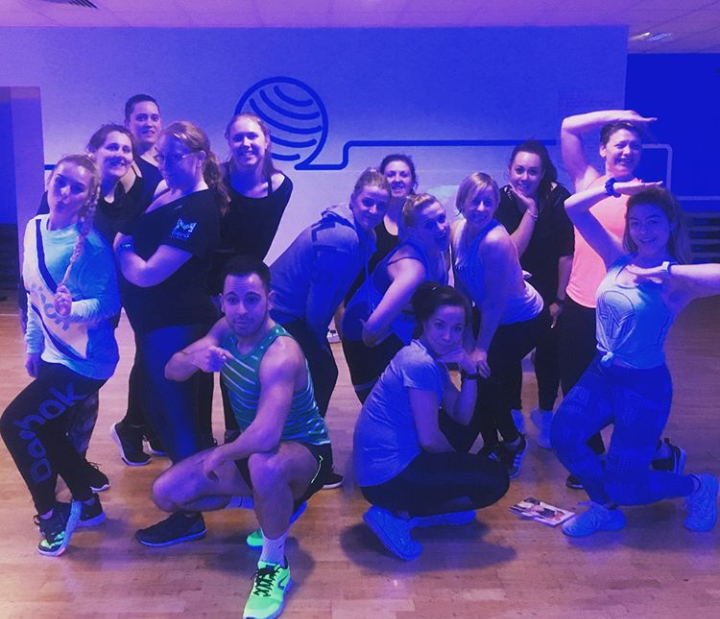
On Sunday I travelled down to London to do my Aim 1 (Advanced Instructor Module) in Sh’bam.

Now I can’t dance. I closely resemble a plank of wood attempting to move to the beat (I can hear what I’m supposed to be doing and when, I just struggle to make my body do it when it comes to dancing). So whilst I’ve done the equivalent courses already in Body Pump, Body Combat, CX Worx and GRIT and also my Aim 2 in Body Pump so knew what was coming, I was really really (really really really) nervous about this one.

Added to this, for personal reasons, I wasn’t in the best head space when Sunday arrived and my confidence and concentration was at an all time low.

I won’t go into the ins and outs of what you do on an Aim but in addition to teaching and getting feedback on this particular course you also learn about (and try) various different types of dance, which- in my case- meant spending the whole day trying things I’d never tried before (ballet, contemporary, Jazz…).

I will start by confirming that, as anyone who has ever met me would expect, I did not excel in any of the movements tried. I also managed to completely forget the choreography for my track about 10 seconds in the second time I taught and pretty much fell to pieces.

I spent much of the day feeling really quite uncomfortable.

But I’m glad I did it.

We all like doing things we are good at. We never mind trying things when we are confident they are going to go really well. That’s fine because even if you’re good at something, going on courses such as these and getting feedback can still improve you.

But although I was by far the least able person in the room on this occasion it was probably one of the most valuable Aims I’ve done. Regular readers will know I hate cheesey phrases like ‘step out of your comfort zone’ but on this occasion, this is what I was forced to do. Not just occasionally but for 9 hours straight! I gave so many things a go that just didn’t feel natural or comfortable or easy- and when my attempts went wrong I tried my best to laugh it off.

I will never be a ballerina but learning how to do things that scare you is a skill that can help you in all aspects of your life, not just the gym.

So if you think your rubbish at squats and so fear approaching the squat rack just go and do it. You might still be a bit rubbish afterwards but you’ll be giving yourself a chance to improve at the same time as reducing the mental block surrounding it.

If you want to learn to do a handstand, sod what people think and just start practicing – the worry about what you will look like is normally a lot worse than any kind of response you might actually receive.

I’ll sign off by saying a massive thank you to Laura Turner for putting up with me the whole day and not laughing at my attempts to dance and also all the other Sh’bammers for their encouragement and advice!

Meal Prep for Mr or Mrs Normal

One of the biggest barrier to eating well for me is being out of the house for around 15 hours a day Monday to Friday. 

If you have a job which leads to you being out of the house most of the day you will probably agree that when you get home the last thing you want to do is cooking, not only some food for that night but also lunch for the following day (unless you really enjoy cooking).  If you don’t make your lunch the night before though, the likelihood is you’ll end up going to Tesco to get a sandwich and packet of crisps which won’t be that filling or inspiring and won’t benefit your nutrition as much as a home prepared meal would.

Meal Prep tends to be something that immediately makes you think of body builders and chicken with broccoli. But, whether you go to the gym every day, twice a day or once a week preparing your meals for the week ahead can help you stay within your calorie goal, save money and keep meals tasty and interesting with minimum effort.  They don’t need to be just chicken, rice and veg either you can make any type of food you like that fits within your calorie goal for that day / week.

Recently I’ve taken this one step further and started to prepare a months worth of meals at a time but if your new to meal prep start with a few days and see what does and doesn’t work for you.

Benefits of Meal Prep

  1. Save time – a couple of hours cooking at the start of the week can save you having to spend half an hour every day making food. When you are busy or tired during the week you will have food that you ca pop in the microwave to heat up quickly.
  2. Save money – Unless every meal is fillet steak the chances are that making your meals for the week is going to be cheaper than going to the shop every day for a Meal Deal and getting takeaways or ready meals on the way home for dinner.
  3. Save calories – A homemade curry will often have fewer calories than a shop bought one – you can use chopped tomatoes and herbs to make sauces and pack in as much veg as you like. You will also be in a position to prepare food in advance that you know will fit your calorie allowance for the week – it’s much harder to keep to your targets if your going into the shop each day and picking food out whilst hungry.
  4. Save on boredom – Be honest, if you go and buy a sandwich everyday do you always pick the same one or two fillings. If you plan and prepare your meals you can add as much variety as you want.
  5. Save on stress – Once done that’s it for the week. No cooking in the evening or having to work out what you have time to pick up on your lunch break.  You can pick up your tupperware boxes in he morning and then just wack them in the microwave when your hungry.  Whilst I’m at it – home prepared meals are often more filling than your average Greggs or Meal Deal.

Meal Prep Tips

  1. Plan – Work out how many meals you need for that week and what you are going to take to hit that number of portions.
  2. Have the necessary equipment to hand- Tupperware boxes don’t need to be expensive. I buy the cheap boxes from B&M Bargains (10 for £1.99) which last for a reasonable amount of time but can be replaced cheaply when they break.  Sandwich bags are ideal for freezing food in.  A slow cooker is the god of meal prep in my eyes – it doesn’t need to be a fancy one, mine was £10 from Asda.
  3. Cook things in bulk- Make a curry / chilli / spag bol / casserole with 4-6 portions.
  4. But keep it varied – Eating casserole every day for a week is rubbish. Try making at least a couple of different meals at a time so you have some variety.  If that means you have excess portions left over you can freeze them for another week.
  5. Portion out your food – Separate food into portions so you know exactly how many meals you have for the week- it will prevent you eating more calories than you planned and stop you running out of food half way through the week.
  6. Freeze half your portions – Pop half the portions into tupperware boxes to store in the fridge, the rest can go in sandwich bags to freeze.
  7. Pot Luck or Plan? I tend to just chuck the sandwich bags in the freezer and take them out at random but if you like to know what you’ll be eating that day label up the bags as almost all meals look the same once frozen.
  8. Let food cool first – My main rookie error with freezing food prep was putting it in the freezer before it has totally cooled. This resulted in a very frosty freezer and an evening of defrosting it because I could no longer open the drawers.  Let everything sit on the side until it’s totally cool before putting in the fridge or freezer.
  9. Slow cooker anything and everything – Meat in a slow cooker will taste so much more tender than that cooked on the hob. You can throw almost anything in and just leave it for a few hours and come back to something with lots of flavour.  Amazing taste, minimum effort equals a meal prep win.
  10. You can meal prep breakfast too- I tend to only do two or three days at a time but if you eat breakfast at work instead of at home or are in a rush in the morning this can allow you to have a good breakfast without the fuss. Sausages and bacon taste ok cold (eggs can be microwaved when you get to work) as done banana and egg pancakes amongst other things.

Experiment and see what works best for you – once you find a routine that suits you it will become second nature to prepare al or some of your meals each week and this system / habit will free up so much time and help reduce the stress in your week.

How to pick the gym for you

Are you looking to join a gym for 2019?  Do you know you want to get fitter, train more, train for an event but aren’t sure how to pick a gym?

Some things to consider to help you make the best choice for you:

  1. Location

When do you plan on going to the gym?  Before or after work, on you lunch break?  Pick a gym that is going to help you fit training into your schedule.  Will it help if the gym is on the journey home from work, in your office building or closer to home.  Once you’ve decided this you can look at the options in that area.

  1. Facilities

What do you want to do in the gym?  Without sounding patronising you will need the equipment to do those things.  You don’t need anything else.  Unless a Watt bike is essential to the training plan you wish to follow it doesn’t matter whether the gym has one or not.  It’s easy to get swayed by gyms which have lots of fancy facilities but unless you know you will use them they don’t need to be part of the gym picking process.  On the other hand if you know the reward of a sauna and steam after a training session will make you go to the gym then look for ones that provide those faclities.  If you’re trying to create a calorie deficit is the gym with the café that does amazing looking cakes the best option for you?

  1. Additional Services

Do you want to do classes rather than train on the gym floor?  If that’s your plan look at the timetables and pick the gym with the timetable that suits you.  Will you want a PT?  If you do look at their offers and specialisms so you pick a gym which can best accommodate your needs.

  1. Atmosphere

Visit the gyms you are considering and ask people you know who are already members what they think (if you don’t know anyone have a look at the reviews on their Facebook pages).  Different gyms have different atmospheres and there is no good or bad it’s just different gyms suit different people.  I train at very corporate style gyms where everything is sleek, friendly and professional but my favourite gym is a local leisure centre which can sometimes be a bit chaotic but has a diverse customer base (in ages, professions, nationalities) and a more relaxed feel to it.  On the other hand I also like the gym in my office (which is a more functional , weight based space) because everyone is very much in and out, minding their own business as we all have a limited time slot to get things done- at lunch time that suits me.  Pick somewhere you will feel comfortable.

  1. Price

How much are you willing to spend?  This may naturally cut down your options depending on realistic budget.  Remember value is based on how much you get out of a service as opposed to whichever is the cheapest.  Paying a lot for a gym that has many great services which you never use isn’t necessarily the best value though so make sure you can afford the membership before you commit but work on how much value you will get form the gym rather than the actual cost per month.  You are far more likely to use something you value over something that is expensive and you feel you should use.

My Guide to Body Pump – Re-Blog!

I wrote this back in April but it’s all still relevant so if you are looking to start Body Pump have a read!

If you have ever looked into taking a class at your local gym chances are you will have seen Les Mills Body Pump on the timetable.

It is probably the most successful group exercise programme in existence. I love teaching it and still take it as a participant once a week.

Done regularly with challenging weights it will give you results.

Most people who want to lose weight / tone up do lots and lots of cardio. Cardio is good for you BUT you also need to do some resistance work to shape your body. Body Pump is great because it works the whole body in 30-60 minutes using a low to medium weight and a LOT OF REPS – all whilst moving in time with some good music. If you have never used a barbell before it is also a safe introduction into some basic lifts / moves.

However if you have never used weights before it can also feel a bit intimidating. I remember my first class and the confusion at everyone collecting lots of different sized plates and changing them quickly in between tracks and my bemusement at how everyone seemed to know what move was coming next!

So this is my ‘what you need to know’ guide to taking your first Body Pump class:

  • Arrive at least 10 minutes early and introduce yourself to the instructor so they can help you set up and so they know that you are new. This can help them tailor their teaching, ensuring you have a good first class.
  • Stick with light weights for your first couple of classes and concentrate on getting the hang of the tempos and the moves. Body Pump works because you are doing large numbers of reps, so whilst you want to use a challenging weight eventually, it’s ok to start off light – 3.75kg each side might be a good starting point for most.
  • The instructor will give you a guide of what to put on the bar at the start of each track (e.g. double the weight, take 1/3 off etc.). Listen carefully to this – they will normally give two options – one for regulars, one for new people but do not be afraid to stick with the same weight all the way through on your first class.
  • The structure of every class will always be the same:

60 minutes

  1. Warm up
  2. Squats
  3. Chest
  4. Back
  5. Triceps
  6. Biceps
  7. Lunges
  8. Shoulders
  9. Core
  10. Cool down

45 minutes

  1. Warm up
  2. Squats
  3. Chest
  4. Back
  5. Lunges
  6. Shoulders
  7. Core
  8. Cool down

30 minutes

  • Warm up
  • Squats
  • Chest
  • Back
  • Core

So when the whole class looks like they know what is coming they do for a reason-

and after a couple of classes you will too!

  • Talking of continuity – we get a ‘new release’ every 3 months. So at that point, every instructor will teach this new set of tracks for 4-6 weeks. That is why when you do your first class some people will look like they know what is coming – they have probably done the track lots of times before! After about 6 weeks, the instructor will probably start to ‘mix’. This means they will bring back some older tracks to keep things interesting and keep your body reacting well to the class.
  • As a new member, you can take advantage of something called Smart Start. This means that if you want to try a few tracks (we suggest up to the back track) and then leave you can do. Leave your stuff out and the instructor will put it away at the end of class. Then next week you can stay for a couple of extra tracks, and a few more the week after until you can do a whole class. This is optional and you can stay for the whole class if you want, but it does provide an option to try the class out and build up week by week if you are new to exercise.
  • With Body Pump technique is more important than weight so don’t worry too much at first about what you are lifting – instead work on getting the moves. Doing them well will bring better results than just picking up a heavier bar!
  • The tempo is also really important in Body Pump. You will hear the instructor ask you to move at different tempos (3/1, 2/2, bottom half pulses). These aren’t just to make it more interesting. The different tempos help to work different muscle fibres and maximise your results so try to work with the instructors pace.
  • You aren’t moving or jumping (well occasionally you might be jumping but rarely!) but you will sweat and you will get out of breathe. Body Pump will burn calories as well as shaping your body.
  • Don’t be worried if you wake up the next day and climbing the stairs or tying your hair back hurts! This is your body reacting to new training and will pass in a few days. After a few classes your body will take less time to recover!
  • If you have done weights in the gym before you may be confused by a couple of the moves we do in Body Pump! Be aware that some moves (Deadlifts for instance) are modified for the studio environment. This is for safety reasons as a) we move at a fast tempo and b) the instructor needs to make sure a large group of people are all moving safely.

I hope that the above tips have made the idea of trying a class less daunting! If you do decide to give the class a go, I would love to hear your thoughts!

Why you shouldn’t make New Year’s Resolutions

Do you make New Year’s Resolutions?

We were talking today at work about what resolutions people planned to make.

The idea was that everyone would write down what they wanted to change and hide it away somewhere and then check again in three months’ time to see if everyone had stuck to their resolutions…. or if they had failed.

A few years ago I would have been up for this.  I’ve made many New Year’s Resolutions over the years, in fact normally the same resolutions year after year which I never kept.

These days I don’t make New Year’s Resolutions as such. Here’s why:

January is a shit time to make drastic changes

It’s cold, dark and everyone is depressed and skint after Christmas.  It’s a rubbish time to decide to suddenly make drastic and often restrictive changes to your life.  Result is you feel miserable two days in and give up.  Planning to give up chocolate on January 1st when you probably have a shed load of left over chocolate in your cupboards is practically setting yourself up for failure. Deciding not to drink in the most miserable month of the year so you’re left sitting on the sofa instead of going out to catch up with friends is going to become unappealing quickly.

Resolutions tend to be negative

Generally we say things like I’m going to give up… sugar, wine, chocolate, smoking.  It’s something we are NOT going to do anymore.  This means we feel like we are depriving ourselves.  Depriving yourself is rarely a long-term plan for success.

Resolutions tend to be vague

I want to lose weight, I want to get fit, I want to earn more money.  They are goals / outcomes we’d like to reach yes, but they aren’t very specific and how and when they will be achieved isn’t always clear.  How often do you make vague plans with a friend to ‘catch up soon’ only for that catch up to not happen?  It’s not because we don’t want to catch up it’s just because we’ve been too vague for anything to actually happen.  Resolutions can be a lot like that.

Resolutions end up leaving you feeling worse about yourself

The actual idea that got me thinking about this was based on hiding your resolution away and checking again in a few months to see if you have succeeded. The flip side of that is if you haven’t then you feel like a failure. Yet if you’ve hidden something away for three months how likely is it you will lose sight of it as a goal as life gets busy? You’re essentially setting yourself up to feel shit. 

Negatives out the way – I fully believe in improving things – here’s what I think is better than making New Year’s Resolutions and why:

Change when you are ready

There’s a popular saying that if you’ve thought about it you’re ready. It’s November – if you’re thinking about stopping drinking fizzy drinks – stop now, why wait until January? If you want to start running start running – these things aren’t banned until January 1st.  I get that over Christmas isn’t the smartest time to start a diet or new training regime – that in itself is potentially setting yourself up for failure.  You could however start to make some small changes to set yourself up for after Christmas.  Start walking more, logging your food intake a few days a week, drinking more water so that after Christmas you aren’t starting from scratch and you haven’t just spent a month feeling crap thinking I’ll sort myself out next year. If on January 1st you don’t feel ready to make a change but do a couple of weeks into the year start it then, or in February or August or October, you haven’t got to wait until 2020. New Year’s Resolutions have the idea of starting at midnight on 1st January – change can however happen at any time.  How often do you think I’ll start my diet on Monday and eat a weeks worth of food over the weekend knowing restriction is coming- you ‘could’ start a diet on Thursday (well we ‘could’ not call it a diet at all but that’s another blog altogether). Generally change that happens when you’re ready as opposed to an imposed time tends to be more effective.

Choosing to make positive changes

Positive changes are easier to put in place than ‘I won’t’ type changes. I will drink more water, I will eat vegetables with every meal, I will walk 10,000 steps a day.  These are things you are going to do – so you do them and you’ve created a change.  You might have also eaten ten chocolate bars but you’ve still eaten vegetables with every meal, the change has still happened. Positive changes make us feel better and so we are more likely to stick to them.

Goal setting over resolutions

I don’t make resolutions any more but I have sat down and done some goal setting for 2019.  I have decided what I want to achieve, these are specific goals so they aren’t things like ‘I want to get fitter’ they are set things I’d like to get done, some will be quick and relatively easy others less so.  Along with these goals I have made detailed plans of what I have to do to reach these specific goals and planned out realistic timescales for taking these actions. I’ve asked for feedback from people more experienced than me on these plans and discussed goals that include other people with them so we are on the same page.  I know what I need to do personally and professionally in 2019 and how I plan to do it.  I’ve got more chance of reaching these goals than if I left I chance.

SMART resolutions

Specific, measureable, achievable, realistic and time specific.  If you goal ticks all these things you’re more likely to be able to reach it.  But taking this on a slightly different tangent being smart about what you decide to try and do AND WHEN will help you succeed.  I know I’ll eat more cake and chocolate than I normally would this month. I will move more to stop me feeling sluggish but I also know I will want a bit of a shake up of my diet and training routine in January to make me feel refreshed. Yet I also know that the first week of January is likely to be an extension of Christmas for me so I won’t do this January 1st. Instead I’m committing to joining in with a programme on 9th January which I know won’t drastically change my current lifestyle as I already follow a lot of the principles but will give me a bit of renewed focus at a time I will need it.  Planning ahead, being honest and smart with this planning will help you feel good about change.

Commit to creating habits / systems instead

If you want lose weight you could think of it as working towards creating habits that in turn help work towards weight loss.  Make drinking more water, creating a calorie deficit and training three times a week a habit and you will achieve your goal but you also find it is something that starts to fit into your everyday life as opposed to something you have to work towards constantly.  The benefit of this is you can pick one small thing to work on then once that has become a habit work on something else, building change gradually.

Re-framing how you think

‘I want to be get over my ex and for them to see me looking happy.’  You could re-frame this thought process to what would make you happy?  Seeing your friends more perhaps? So instead of I want to get over my ex you could say I want to go out and do something fun with my friends once a week / fortnight / month (commitment depending here).  Instead of focusing on becoming happy or getting over someone you could just commit to doing something that has the potential to make you happy and allow feeling happy and getting over them to happen naturally – all the time your still succeeding in your actual goal of getting out and socialising.  It sounds very self help book but when you start to habitually re-frame your thoughts, you start to find it easier to make changes.

I’ve made lots of changes to the way I approach things in 2018 – old habits die hard admittedly but by looking at making changes in a more positive light you can create a you that you are happier with and start 2019 not feeling the need to set resolutions.
Supplements

For a couple of years I have limited the supplements I take to a Multi Vitamin and Omega 3 but recently after feeling fatigued I introduced a couple of additional supplements into my routine, namely liquid iron and hydration tablets.

  • In particular – liquid iron (specifically Spatone) 

Adequate iron levels are important for the body to function properly whatever you do day to day and Doctors have often suspected my iron levels to be low (although blood tests have always shown otherwise – I think I’m just very very pale!).  More relevant for me though, from my own reading on the subject recently (because before I start using supplements I like to do some research), ensuring the levels of iron in your body are adequate can have a positive effect it can have on your fitness goals in several ways.

Some things taking an iron supplement may improve (note I’m not massively sciencey and this is just my understanding of what I read):

Energy Levels Ensuring iron levels are not low can help reduce fatigue during workout as without sufficient iron less ATP can be produced (part of the reason why those lacking sufficient iron can feel tired and fatigued).

Performance in the gym – One thing iron does is ensure oxygen saturated blood is able to efficiently reach the areas that need it thus assisting your performance.

Recovery – That same nutrient filled blood pumping efficiently into muscles can also aid recovery after training.  In addition low iron levels can reduce the efficiency of our immune system, which could also make it harder to recover from a tough week of training.

  • Hydration Tablets (specifically ORS)

Hydration plays an important role in sports performance (and every day human being functioning).

Most of the time I still just drink water (and I average about 4 litres a day) but when I have been feeling run down I’ve been adding a hydration tablet to my pint of water a couple of times a day to perk myself back up. Adding a hydration tablet into your water can help you get the right balance of water and electrolytes needed to replenish your body after training. The theory therefore is that you can hydrate more efficiently after training by drinking a hydration solution to just water. The advantage to these over sports drinks is the tablets are lower in sugar and calories.

As little as a 2-3 percent reduction in body mass via water loss can have a significant impact on your concentration and muscle power so potential benefits to remaining hydrated:

Reduced chance of cramp, muscle fatigue and joint pain. As the core body temperature and heart rate can be regulated more efficiently.

Reduced fatigue. Helping making training easier.

Improved concentration. Being well hydrated can maximise the speed at which messages are sent from the brain to the muscles, resulting in a better performance for longer.

Avoid Dehydration When exercising, your body loses water and essential salts through sweat.  If not replaced, this can result in dehydration – this obviously is not good.

Obviously you can’t replace good nutrition with supplements but knowing what your body needs and making smart use of supplements to ensure you get it can be a good thing.

The Subtle Art of Not Giving a ****

I’m not a fan of treadmills but I do enjoy getting outside in the fresh air, so whenever I get running in my training programme I try to do it outdoors.

The first time I got a session that mixed running with body weight exercises that I would normally do in the gym I was torn.  I didn’t really want to do the running on a treadmill but how else did I mix it in with Bulgarian Split Squats? The answer was I got a bit creative and used tree stumps and park benches I found along my run to mix them in (body weight squats obviously).

Since then I’ve adapted lots of my running plus body weight sessions so they can be done outside and they are often my favourite workouts of the week.

When I tell people about these workouts I am often met with slight horror at the idea of doing a squat or a burpee in the middle of a park or along a cycle path.  Some people don’t even like the idea of running in public so the idea of adding in body weight exercises just seems too embarrassing.  What is people see me?

I would say, don’t worry, nobody is looking at you, but actually that probably isn’t true.  It’s a bit different so sometime people do look.  Last Friday I went out on my lunch break to a nearby park which is right next to a main road.  I did some sprints mixed in with body weight squats and half way through a set of squats a couple of blokes in a van felt the need to shout their ‘feedback and encouragement’ in my direction.

To be honest though this didn’t bother me and certainly didn’t stop me finishing the workout.  Of course I felt a bit silly the first time I trained outdoors but now as long as I finish my workout and get to do it in the environment that makes me feel good (and running outside does that) I don’t care whether strangers watch me or even take the piss.

Because there’s one thing I’ve learnt from doing these workouts outside.

If you are doing what works for you it doesn’t matter what other people think, especially people you have never met, and those people that feel the need to judge you not only don’t matter but are probably holding themselves back from doing what they really want to do because they are too insecure to stand out from the crowd.  Essentially it’s ok to be different.

I’m also pretty confident that the odd person that walks or jogs past as I’m doing mountain climbers on a patch of grass in a park would like to have the confidence to do the same and rather than looking at me to judge they are perhaps just curious or even a little impressed.

A few months back I was in the middle of set of jump lunges on a cycle path in between runs and two elderly ladies stopped and asked what I was doing and why.  I explained and they asked a few more questions about what they could do at home that was perhaps a little less jumpy and then went on their way.

I appreciate that training outside isn’t for everyone and if it isn’t for you fair enough, but if there is a type of training you would like to try but are holding back for fear of what others might think then stop.  Give it a go and pretty quickly you will coem to see that even if people do judge you it matters very little.

Training outside has been like my own little version of learning the subtle art of not giving a shit!

Twenty Things All Les Mills Instructors Will Know – Updated and 100% new content (take that 80% new content Advanced Training)

  1. The words Recommended and Required mean different things.
  2. Les Mills have Live Chat- when did that happen!?
  3. You won’t need to do 2 touchpoints a year if you fall out of a tree and break your leg whilst rescuing your cat in December.
  4. Yes, that appears to be the only example of special circumstances anyone of Facebook can imagine.
  5. Other than that you do.
  6. Except maybe you don’t.
  7. It’s complicated.
  8. But Tribal Gatherings do still count as a Touchpoint for all your programmes.
  9. Yes even if you don’t do that programme on the day.
  10. Maybe check on Facebook though just in case?
  11. Talking of Tribal Gatherings – Combat and Step will apparently always clash.
  12. Body Balance will always be on at the crack of dawn.
  13. This is just the law now. Like wearing Reebok is #thankyoureebok
  14. Future instructors will one day know of Aim 1 and Aim 2 in the same way I know of actual physical copies of releases – a mythical thing people more experienced that me reminisce about! I mean imagine waiting for the postman to deliver your DVDs!
  15. We will now do Advanced Training.
  16. Advanced Training is quite pricey though so Black Friday probably definitely needs to happen!
  17. Advanced, Elite – does anyone now know how the hierarchy works?
  18. Nobody knows how Tribe Coaches will be made now – can we cope with this much change in one go?
  19. But the portal seems able to cope with quarterly bookings this time round – what will we talk about on Facebook?
  20. Ahhh Virtual- we will talk about Virtual.

*Note this is intended as a tounge in cheek look at recent developments in the world of the Tribe and not intended to be taken too seriously!

How to Travel and Train

Travelling can throw you off your training routine, whether it be for a holiday abroad or at home or a short break or work trip.

However, there are a variety of ways you can keep active whilst travelling: 

  • Hotel Gyms

Many hotels now have gyms – albeit the quality of equipment can vary from a full gym worth of equipment to a couple of pieces of cardio equipment and a single dumbbell.  If you are staying in a hotel with a gym then taking your gym kit and an open mind can be one option.  You may be able to get an idea of what equipment the facility has from their website beforehand so you can plan a workout ahead of time, but if not you can probably work with what is there to keep moving- even if it means departing from your normal routine.     

  • Running

Free and something, you can do anywhere.  Often if I’m staying overnight, in a hotel I’ll just take my running gear and go for a 15-20 min run in the morning.  No checking gym opening hours required so you can fit it to whatever your schedule is.  The added bonus is running somewhere different to usual can be interesting – a run around the city’s sights or along the beach is often more inspiring than running round your local park (or for me down the local cycle paths) and the fresh air first thing can set you up for he day.

  • Yoga

Something which you can do in even the smallest of hotel rooms without worrying about people complaining about you jumping up and down and making noise!  If you already practice yoga you can probably run through your own sequences of moves but if you need inspiration, You Tube has lots of free guided yoga sessions which you could follow.

  • Virtual Services

There are lots of workouts you can do from home now- think Les Mills On Demand and Beach Body.  Some of these require equipment but plenty do not.  If you travel a lot it could be worth a subscription so you can workout in your hotel room when you are away.  If you don’t travel that often many services offer week long trials for free which you could utilise whilst on holiday.

  • Local Gyms

A great option to consider – especially if you are travelling in the UK.  Check if your current gym membership allows you access to any gyms in their chain, as you may be able to access without additional charges.  If not gyms such as The Gym Group and Pure Gym tend to do day and week pass options / trials for less than a tenner.  The benefit here is you can pretty much guarantee the gym will have all the equipment you need to stick to your normal workout routine without having to make changes.  You may even be able to get to a few classes if that floats your boat.  I did this when I went to my mums last Christmas – visiting the local Nuffield (I have a Nuffield membership) on Christmas Eve and then getting a day pass for The Gym on Boxing Day.  Managed to get my workouts in for an extra £7 without having to make any adjustments to what I wanted to do.

  • Body Weight Workouts

You can put together an entire cardio and / or resistance workout using body weight only (think push ups, burpees, lunges, squats, jumping, plank work).  This can be done indoors or outdoors to suit you.  I’m quite keen on short bursts of running (say 500m) with sets of jump lunges, squat jumps, burpees and press ups performed after every run- gives you a quick all over workout and lets you take in some fresh air. If space is tight you could focus on core stability moves and work the trunk of the body, taking out impact work.

  • Tabata

My favourite HIIT tool- 20 seconds on, 10 seconds rest x 8.  You can do any moves you want.  7 rounds gives you about a thirty minute workout which will elevate the heart rate.  The ability to do any moves means you can do it anywhere with any equipment you have or just your body.  Type tabata timer into the app store and you will find lots of timers you can use.

  • Tennis / Golf

If you are on holiday abroad there will often be tennis courts or similar at your hotel.  Getting involved in some sports whilst you are away is a great way of getting exercise in – beach volleyball, tennis, golf- without really thinking about exercising.

  • Sight Seeing

Walking might seem less intense than your normal training sessions. But if you are on holiday and planning on visiting lots of sites remember that the walking you do will count towards keeping moving, so perhaps you want to leave the gym kit at home and just get in lots of steps whilst away.

  • Rest

If you travel all the time finding a system for training whilst away is a good idea.  However, if you are only away for a week or two on holiday there is no harm in deciding to just take a break from training completely.  This could be the perfect time to let the body rest so you are eager to go again upon your return.

I would love to hear other people’s ideas and methods of staying active whilst on the move.

A Key Skill We Could All Do With Brushing Up On

Integrity – the quality of being honest and having strong moral principles.

Fitness instructors (be that Gym instructors, PTs or Group Exercise instructors) are encouraged to demonstrate integrity towards our clients.

If you do not show a genuine care towards your client(s) and provide clear, honest advice – from goal setting through to working towards those goals you will lose those clients.

Sometimes this will mean saying things they do not want to hear- you will not get a six pack in 2 weeks just from doing some sit ups, lifting weights will not turn you into Arnie.  To do otherwise and suggest that you can help someone achieve unrealistic goals in unrealistic timeframes would show a lack of integrity.  But you also need to phrase this in a way that the client will understand and mean they still want to be your client (as opposed to a way that makes them think ‘well they can’t help me I’ll go and find someone who can’).

Equally – hearing what we think the client is saying rather than what they are actually saying, because we are caught up in our own misconceptions or too busy trying to defend our own beliefs, will in turn cause distrust between customer and service provider.

Therefore, demonstrating integrity – a key skill for fitness professional – essentially comes down to communicating effectively. 

To be an effective fitness professional you need to be an effective communicator.

Or the flip side – A brilliant product can be undermined by poor communication. 

Because if you mis-communicate your message people can lose faith in what you say – then even when your message is brilliant people will still question and doubt you – put simply the trust has gone.

As fitness professionals there are many skills we need to develop and always areas where we can expand and improve our knowledge – CPD is a wonderful thing.  I do think our skills need to go beyond pure fitness knowledge and we need to work on our communication and listening skills just as much as our squat technique in order to be successful.

I believe at school they called them transferable skills.

No matter where you work, in what industry, and even in our personal lives developing these skills can be massively useful in not creating unnecessary conflict – which is always a good thing.