Ways to Create a Calorie Deficit- Part Three – The Hand Job Diet

I spent much of December preaching that if you want to lose body fat you need to create a calorie deficit.  Then it occurred to me that’s fine as long as you know how to do that.  I’ve pretty much always gone by the school of thought that people know what thy should do it’s just hard to actually do it.   I have had lots of conversations recently however which have suggested that actually people are confused.  There are so many different fads around, plus products advertised like Skinny Coffee, Fat Loss shots, magic fat busing pills, ideas that you should only eat fruit before 11 or not carbs after 6 that a lot of people are genuinely confused.

So I decided this month I’d cover some ways you can create a calorie deficit.  So far I’ve covered Paleo and Intermittent Fasting.

Here’s what I see as the difference between a fad and these systems.  A fad requires you do things like cut out food groups completely, eat them in silly combinations, supplement what you eat with products that really just tend to act as a laxative.  They are plans that are not sustainable and are likely to cause binges at some point.

Paleo and Intermittent Fasting are simple systems of eating that help you control calories (obviously people have other reasons for doing them and they can have additional benefits on top of calorie control but for my purpose here I’m only thinking in terms of calorie deficits).  They have rules, yes,  and will not suit everyone, but they don’t require cutting out whole food groups, are safe and, if someone finds they suit their lifestyle, are perfectly sustainable long term.  They can also be done part time (as I do Paleo just four days a week) and still help create a calorie deficit.

Esssentially, if you want to create a new lifestyle habit the easiest way to do this is create a system that allows you to implement this habit into your life.

Now so far I have covered quite specific methods.  You can however create a calorie deficit with much more simple systems and today I want to cover ‘The Hand Job Diet’.

This method invented and named by a coach I’ve worked with a lot over recent years, Ricky Long.  Ricky favours training and eating to live, not being overly restrictive and not being a slave to counting calories and tracking macros when you don’t have to.

He recommends to client’s a simple method of having three meals a day consisting of:

  • One handful of protein
  • Two handfuls of veg (at least two colours)
  • Once a day add in one handful of a big carb such as rice, pasta, bread
  • Add in some snacks each day as need
  • If you feel hungry you need more food so consider adding in another meal
  • If you feel tired you have eaten too much

This allows for no restriction, you could snack on low calorie foods such as fruit but also allow some snacks to be your favourite foods (cake, chocolate, crisps).

You can adjust depending on results – so if you aren’t getting the results you want you may need to be honest about how many snacks you are having and how many calories each one contains.

It could also stop you craving certain foods as no food is off limits, thus reducing the urge to binge.

If your diet is not brilliant at the moment, these small changes will probably create a big difference and easily create a calorie deficit.

If you like food though, such relaxed rules may be hard to follow.  I’m the kind of person who needs some structure to my daily meals or I could just eat constantly for 8 hours each day, so again this won’t work for everyone but it is a way of creating a calorie deficit with minimal thinking or rules to follow.

I’ll repeat, the fundamental characteristic of all fat loss methods is creating a calorie deficit.  The Hand Job Diet is another way to manage portion control thus help keep you within a calorie deficit (without actually counting calories).

I have to credit Ricky Long on this method – if you like the idea and want to have a look into some of his other fitness and nutrition advice check him out on instagram @Rickylong42, Facebook (Ricky Long) or at his website here


Ways to Create a Calorie Deficit- Part Two – Intermittent Fasting

I wrote last week about how I tend to use a Paleo based diet to help me remain within my calorie allowance for the week (whether that be calorie deficit or maintenance).  Restricting certain foods is not for everyone – another way some people control their calorie intake is Intermittent Fasting (IM Fasting).

IM Fasting in a nut shell is only eating during an 8 hour window each day (e.g. 10 am-6 pm / 12-8 pm) and fasting the rest of the time (consuming only water and perhaps black coffee).

Now this naturally restricts your calorie intake each day because it’s hard to eat THAT many calories in only 8 hours.  The plus side is you can eat relatively freely in terms of what you eat knowing that the time window will assist in preventing over eating.

Like Paleo, this is also not for everyone.

I tried it for a while and liked some things about it but ultimately struggled to stick to it- largely because I’m very active across two jobs most days of the week.  This being said I do know some people who regularly use this as a tool.

For me the Pro’s were:

  • Being able to eat all food types freely during the 8 hour window.
  • Eating larger meals (I like big plates of food!).

Ultimately the Con’s outweighed this for me though:

  • Having to teach at 7 am and then wait until mid morning to eat.
  • My eating window closing and having to teach an evening class and then not eat afterwards.
  • It takes planning – you need to have a good meal ready for when you break the fast. That’s hard in an office.
  • I found that in actual fact I was creating a massive calorie deficit on many days because I didn’t want to eat as many calories as I needed in such a short space of time.  FYI- A massive deficit is not ideal / sustainable over time and I need to be adequately fueled to do my job(s).
  • It made social occasions difficult.

As I concluded last week.  The fundamental characteristic of all fat loss methods is creating a calorie deficit.  IM Fasting is another option which will assist in eating less than you burn if used correctly, although probably only genuinely suits a small proportion of people.


Ways to Create a Calorie Deficit – Paleo

I’ve written before about my own nutrition and how I mainly eat a Paleo based diet.

I say Paleo based because I don’t follow Paleo eating at all in the strict sense or all the time and I adjust it to suit my own needs.

Essentially Paleo is eating what cavemen ate so basing your diet on meats, veg, nuts and seeds.   It’s high protein and fats and low in carbs and dairy free.   I eat largely like this with some exceptions (I include potatoes and often some chocolate milk after my classes in the evening).  This is largely because my job means I’m very active so it wouldn’t be sensible to stay low carb.  I try and do this 4 days a week with three days where I eat freely (although often along the same lines just with the addition of some bread and maybe pasta or rice and some sweet treats).  If there is a social occasion on one of the days I’d normally eat Paleo I just don’t do it for that period of the day / that meal.  Some months I just keep a check on my calories because that’s how the mood takes me.

So if I’m not strict about it that begs the question why do I bother.

Quite simply it is a way of keeping myself within my calorie requirements that suits my lifestyle and reduces the need for me to count calories.

I know I eat more at the weekend.  I’m not in the office and more likely to go out for food or get a takeaway and eat chocolate whilst I’m sat on the sofa etc.  By slightly reducing my calorie intake Monday – Thursday whilst still filling up on lots of protein I leave myself room for three more calorie dense days.  This happens without even thinking about what I’ve eaten and how many calories is in it.

My message here is Paleo is one method of eating – it can have many benefits (and equally some drawbacks depending on your activity levels and lifestyle) but whatever way you look at it, it is one way you can reach a calorie deficit.  So if you lose weight with it this isn’t because of a magic combination of food just a general reduction in your calorie intake.

For me personally it’s still the best way of eating most of the time as it reduces how often I think about food and encourages me to eat more homemade and less shop bought.  Sometimes the idea of banning certain foods (even though it’s just foods and not food groups and even though it’s only ever for a few days each week!) is bad for my mindset so I will have periods where I don’t follow this and just eat to a bog standard calorie deficit.  Not getting hung up on what foods you do or don’t eat is more beneficial to your long term health than cutting out bread to feel less bloated will ever be.

So it might suit you, it may not, but the habits of eating less processed foods and getting enough protein whilst keeping in a calorie deficit are all positives however you chose to eat.

January 1st v. January 3rd

January 1st Dry January – no alcohol for 30 days

January 3rd I really needed a glass of wine last night after my first day back at work. Fail.

January 1st I’m not eating any chocolate ever again

January 3rd Except for all the chocolate I have left over from Christmas. Fail.

January 1st I’m going to go to the gym every day

January 3rd I haven’t actually been to the gym yet. Fail.

January 1st I’m going to get up and go for a run every morning.

January 3rd It’s very cold and dark in the morning I might just stay in bed. Fail.

January 1st I’m giving up carbs this year.

January 3rd I’m hungry I might just have some pasta. Fail.

OR

You could forget any of these all or nothing resolutions and pick one small change you could make from the following and just work successfully on that instead:

  • Have at least one alcohol free night a week
  • Twice a week replace your normal sweet treat with some fruit
  • Do 30 minutes of activity twice a week
  • Get up an hour earlier once a week and go for a walk
  • Eat two handfuls of vegetables / salad with every breakfast, lunch and dinner

Ten ways to get ‘fitter’ in 2019

  1. Work out how many calories you burn a day on average and eat this many (to maintain weight) or 20% less (to reduce weight)
  2. Swap one of your sugary snacks with a healthier replacement (e.g. a piece of fruit) each day. And yes I know fruit has some sugar in it but a banana over a Mars Bar will help you cut calories and provide less of a post sugar slump.
  3. Stop having cheat meals. Cheat meals create a restriction / binge / food as a reward mindset.  Eat whatever you want whenever you want within reason without viewing food as good and bad.
  4. Eat protein. Aim to eat 1g of protein per kg of body weight. Will help you feel satisfied without overeating.
  5. Drink at least 0.033 litres water per kg of your body weight each day (so if you weight 60kg drink two litres a day).  Fat loss, performance – hydration is so important to your health.
  6. Don’t exercise at all at the moment? Aim to complete a 30 minute session every week for a month, two 30 minutes sessions a week the next month and three 30 minutes sessions the following month. Boom = Exercise habit created.
  7. Increase your NEAT. However much you exercise aim to increase your non exercise movement by at least 10% each day (i.e. walk more)
  8. Get more sleep. Enough sleep every night will help with weight loss, stress, energy levels.
  9. Learn something new. Want to learn to do a handstand, swim, play netball? Practicing towards mastering a skill will get you moving without exercise being the main goal itself.
  10. Set yourself a challenge. Run in a race, do a Tough Mudder, compete in a swimathon. Setting a challenge can give you the incentive to get to your training sessions and maintain focus.

Two Last Things for 2018- 30 Day Challenges and Slimming World

I hadn’t planned to write this one but two things kept popping up on my Social Media over the weekend which I wanted to address.

Number One- 30 Day Challenges

No alcohol in January, no cake, no sugar – you get the drift.

Yes, if you can do this it’s amazing, and if you generally have good habits already in place this is totally achievable.

BUT

January is a shit month.

It’s cold, dark, everyone is skint and on a comedown from the excitement from Christmas.

Now take away something which you enjoy (and I assume you enjoy whatever you are thinking of giving up or it wouldn’t be a challenge) on top of that and you are just making January a little bit more tough for yourself.

Yes, of course the health benefits be good for you.

Chances are though at some point in January will power will crack and one drink or cake will spell the end of the challenge and possibly spur you to say ‘fuck it, i failed so i might as well have some more’.

I’m not saying not look to make improvements in this area but be kind to yourself about it.

If you have a drink every night aim for two nights a week where you don’t drink.  Aim to reduce your cake consumption by 50% of what it currently is.  Still beneficial, still challenging, still an achievement.

But here’s the thing- if you aim to do something 100% and slip up you see it as a failure.  If you aim to make small changes then you allow yourself some room to slip up without failing to reach your goal.

Changing your mindset as to how you make changes and view those changes will ultimately help you sustain them long term and build upon each win.  Making goals to change things more realistic will make you more likely to succeed and help you treat yourself a little kinder.

Number Two- Slimming World

I’ve seen lots of posts by Fitness Professionals talking about the negatives of Slimming World.

Now yes- some of the rules are absurd.

Yes – the education around nutrition is poor.

Yes- Some consultants actively discourage exercise (muscle gain doesn’t assist in the scales going down and they only go off weight).

Yes I would encourage people to see a nutrition coach or PT for advice instead of go to Slimming World.

BUT

I worry the demonising of the brand could alienate those who are Slimming World Members.

No it’s not the ideal.

But for some people Slimming World is a less intimidating option that booking in with a PT.

For some people they perhaps need to do that and build some confidence before they go to a gym.

I say this because this was me.

And knowing that PTs actively disliked Slimming World may have discouraged me from making that leap from a slimming club member to a gym goer.

Once I started working with a PT I quickly phased out Slimming World. I didn’t need someone to tell me to to, as I learnt more I was able to make the choice myself.

My point is whilst it isn’t the optimum of nutrition it also isn’t harmful.

It can teach some basic lessons in what to eat more of and what to eat in moderation, it can help you learn to manage your eating, it can act as a springboard.

That is it could act as a springboard if we encourage those Slimming World members we meet to use it as such.

Ultimately Slimming World creates a calorie deficit.  We encourage clients to create a calorie deficit.  Different methods, different education but same goal.

I’m not suggesting we celebrate Slimming World but we could instead educate people as to why some of their rules are a bit silly in slightly kinder words so as to not put people who do currently do Slimming World from also working with us.


‘Diets’

Tomorrow is the day where traditionally people go on ‘a diet’.

The word ‘Diet’ conjures up images of restriction, lettuce leaves, starving, no chocolate, cakes or sweets, cutting out carbs, cutting out fat … the list goes on.

What ‘Diet’ actually means is the sum of food consumed by a person – what we actually put in our mouth.

Some diets may be more health focused than others, some may promote weight loss and others weight gain, but we all have a ‘Diet’.

So if you were planning on starting a ‘Diet’ tomorrow – good news- you’re already on one and have been for the last 365 days!

So actually all you need to do is make some small improvements to that current diet to see weight loss.

If you have booked sessions with a trainer, signed up to a programme or plan (in person or online) then you know you will get the advice you need to do this sensibly.

If you are planning on making the changes yourself then don’t look to quick fix diets or plans that promise you a six pack in six weeks.

Work out how many calories you burn daily, take 20% off this and aim for that number of calories each day.  This will create safe and sustainable calorie deficit which will allow you to reduce body fat steadily.

You can eat whatever you want as long as you stick to that calorie allowance.  Perhaps you will want to make more sensible choices and eat less junk but overall the way to reduce body fat (which I am assuming is the goal) is to consume a little less than you burn.

Overtime you might want to start fine tuning what you eat, but to start just focusing on hitting a calorie deficit is a great habit which will make a huge difference to how you feel and one small change to your diet at a time will have a longer lasting effect on your health in 2019 than any quick fix fad diet.

Gym to Office: A Packing Guide

What To Pack:

  • Gym bag – Small gym bags are cute. They are also impractical for the gym to office routine and will end up frustrating you.  Pick something big enough to allow you to carry a winter outfit and boots as its better for it to be a bit roomier in summer than too small in winter.  It’s a plus if they have a section for trainers / wet towels.
  • Towel: Ideally a microfiber one as they take up less room, are light weight and quick drying (can also be used multiple mornings before they need washing). Most common thing to be forgotten – emergency tip: use your gym kit as a makeshift towel when this happens!
  • Shower gel, Shampoo (2 in 1 with conditioner if you can) and deodorant. miniatures are expensive and don’t last long so just take full size ones. Keep them in a toiletries bag though because a leaking shampoo bottle is never fun.
  • Other toiletries – These will depend on what’s a non negotiable in your morning routine. I’m pretty minimal which helps from both a packing and getting ready with speed point of view but you may need moisturiser, hair spray etc.  Remember though, the less you use the less you need to carry.
  • Hair brush. Mine is foldable to save space.
  • Hairdryer / straighteners. Now I don’t dry or straighten my hair as it’s naturally straight so I don’t need to.  You may have a gym that has these in the changing room anyway.  If you ned to use these products and the gym doesn’t have them consider getting travel sized versions to assist with packing.
  • Underwear. Second most common thing to be forgotten.  It’s never fun going commando to work or wearing a sweaty sports bra (ladies) so just try not to!
  • Work clothes. You may or may not have a choice what you wear to work.  If you can choose go for things that don’t easily crease.
  • Make up – Pack what you need for that day and no more. It helps save time getting ready and space.
  • Shoes – Third most common thing to forget. Some pro packers I know keep a spare pair in work for such occasions!

Christmas Eating

It’s hard to eat well over Christmas.

Even if you have good eating habits / systems the rest of the year it’s difficult over Christmas.

I have meals prepared at home in the fridge – it would take me no effort to eat them at all, yet this last week I’ve eaten all sorts instead of them because there’s just so many temptations around.

Tuesday there was homemade Christmas cake (made by a work colleagues wife who quite frankly makes the best cakes ever), Wednesday was a working lunch in restaurant that does a brilliant crab linguine, Thursday was a pizza and chocolates lunch to celebrate a work colleagues birthday followed by a team meal in the evening (think pasta and much alcohol), Friday was a hangover in work and the work Christmas party (free bar), Saturday was hangover food and tomorrow is Christmas Eve (so all meals must be chocolate based as is the law).

In the past I would have felt guilty.  This year I’ve accepted it’s ok.  I eat well most of the time, and I’ve had some decent meals too around the less decent food. I’ve trained when I’ve been able to and let’s face it –it’s a couple of weeks out of 52 (and overall I generally eat alright). I’m not going to be in a calorie deficit, but I’m not in a massive surplus either.

So this year I feel no guilt.

I’m not saying Fuck It let’s go crazy – I’m getting better at ignoring the all or nothing mindset.  If I said that and went mad eating everything I possibly could I’d probably feel regret in the new year.

I’m just saying I won’t feel guilty for enjoying myself over Christmas.

Realistically this is not going to cause a dramatic amount of damage to my weight, certainly nothing that going back to my normal eating habits in January won’t sort almost immediately.

And mindset wise it’s going to be so much healthier for me to not feel guilty for relaxing or like I need to punish myself for it in January.

So should you follow your ‘diet’ over Christmas?  If you want to, yes, if you don’t then no and if you try to and slip up it’s ok.  What isn’t ok is making yourself feel bad for whatever decision you make.

Feel the Fear and Do It Anway – Reblog

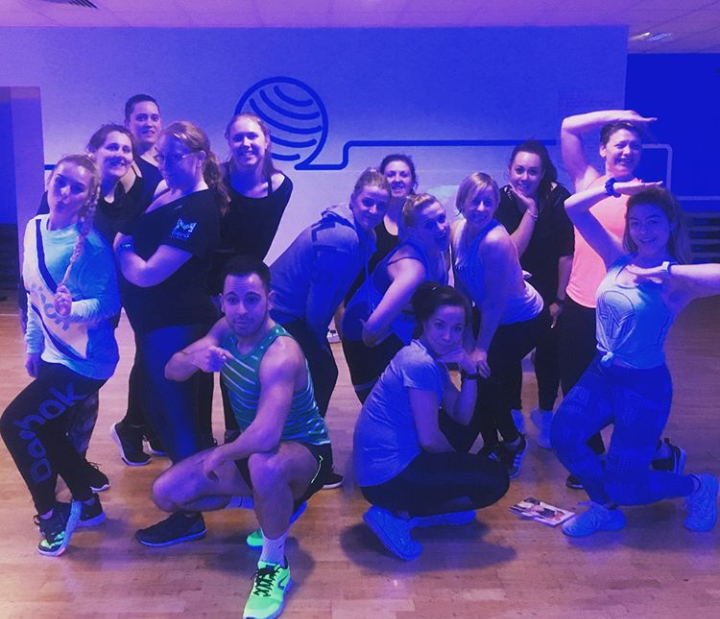
On Sunday I travelled down to London to do my Aim 1 (Advanced Instructor Module) in Sh’bam.

Now I can’t dance. I closely resemble a plank of wood attempting to move to the beat (I can hear what I’m supposed to be doing and when, I just struggle to make my body do it when it comes to dancing). So whilst I’ve done the equivalent courses already in Body Pump, Body Combat, CX Worx and GRIT and also my Aim 2 in Body Pump so knew what was coming, I was really really (really really really) nervous about this one.

Added to this, for personal reasons, I wasn’t in the best head space when Sunday arrived and my confidence and concentration was at an all time low.

I won’t go into the ins and outs of what you do on an Aim but in addition to teaching and getting feedback on this particular course you also learn about (and try) various different types of dance, which- in my case- meant spending the whole day trying things I’d never tried before (ballet, contemporary, Jazz…).

I will start by confirming that, as anyone who has ever met me would expect, I did not excel in any of the movements tried. I also managed to completely forget the choreography for my track about 10 seconds in the second time I taught and pretty much fell to pieces.

I spent much of the day feeling really quite uncomfortable.

But I’m glad I did it.

We all like doing things we are good at. We never mind trying things when we are confident they are going to go really well. That’s fine because even if you’re good at something, going on courses such as these and getting feedback can still improve you.

But although I was by far the least able person in the room on this occasion it was probably one of the most valuable Aims I’ve done. Regular readers will know I hate cheesey phrases like ‘step out of your comfort zone’ but on this occasion, this is what I was forced to do. Not just occasionally but for 9 hours straight! I gave so many things a go that just didn’t feel natural or comfortable or easy- and when my attempts went wrong I tried my best to laugh it off.

I will never be a ballerina but learning how to do things that scare you is a skill that can help you in all aspects of your life, not just the gym.

So if you think your rubbish at squats and so fear approaching the squat rack just go and do it. You might still be a bit rubbish afterwards but you’ll be giving yourself a chance to improve at the same time as reducing the mental block surrounding it.

If you want to learn to do a handstand, sod what people think and just start practicing – the worry about what you will look like is normally a lot worse than any kind of response you might actually receive.

I’ll sign off by saying a massive thank you to Laura Turner for putting up with me the whole day and not laughing at my attempts to dance and also all the other Sh’bammers for their encouragement and advice!