One for the Ladies

Solidly aimed at 50% of the population this one.  Sorry.

When I’m on my period I literally crave fatty, sugary, salty foods.  When you spend a lot of time trying to eat well this is pretty annoying so I’ve spent a reasonable amount of time looking into why and what I can do to try and make myself feel better (because I suffer from horrible cramps most months and bloat enough to feel like I may actually be pregnant with a baby Elephant) without giving into eating 10,000 calories of pure fat and sugar a day.

Just before and during our periods our Serotonin levels lower (less feel good hormones), our stress hormones spike (not helping in the feeling good department) and our bodies use more calories making us feel hungry more often.  It’s therefore not hugely surprising we want to comfort eat- but apart from eating too much of the crap stuff affecting your body shape aims (I won’t say weight!) eating too much sugar will also cause a spike followed by a crash and burn which also doesn’t make you feel good in the long run.

I’ve therefore been making an effort to read up on what foods will help make me feel better without having a negative affect on looking after myself in general to try and implement them more into my diet .

Foods To Eat:

  1. Water – Not really food but hydrating well helps keep skin clear, prevent bloating (the better hydrated you are the les likely you will retain water) and reduce cramps.
  2. Almonds – also sesame seeds / flax seeds- these have calcium in them and calcium (but not dairy) can help reduce cramps.
  3. Dark chocolate – A little dark chocolate can help relax muscles and so reduce cramps, it will also help release some happy hormones.
  4. Celery – Full of water but not full of calories so a good option if you feel the need to constantly graze!
  5. Hummus- This one may be a bit controversial. I have read that chickpea’s can help you sleep better and also help improve mood. I have also read however that they can be classed as a Legume and cause bloating so perhaps eat in moderation.
  6. Pineapple – Help relax muscles (less cramps) and reduce bloating
  7. Bananas – Helps relax muscles (reduce cramping) also contains Vitamin B6 which can help improve your mood. Banana’s are also good at helping to regulate the digestive system, which some women can have problems with during this time.
  8. Tea – Yes it has caffeine in it, but it’s apparently better for you than coffee (which can increase anxiety levels and cause you to and retain water). Other types of tea can also help: Green tea for instance provides a little caffine still, peppermint tea can help soothe an upset stomach, Chamomile tea is relaxing and can help reduce anxiety.
  9. Spinach / Kale- These Superfoods have Calcium in them which assists in alleviating cramps. They are also Iron rich (our iron levels can drop whilst we are on our period hence why we crave iron rich foods).
  10. Salmon – This is full of omega 3 and Vitamin D. If you can eat it the week before you are due on it can have an anti – inflammatory effect.
  11. Oranges – Provide Calcium which can help relax cramping muscles and Vitamin D (can help regulate your mood).
  12. Brocolli – Full of Magnesium, potassium, Calcium, Vitamins A, C, B6, E – Good for improving your general mood and fighting fatigue.

Foods To Avoid:

  1. Fizzy drnks – Can cause bloating, plus sugary.
  2. Processed foods – Tend to be high sodium – sodium boats. Making food from scratch can reduces salt intake).
  3. Fried foods – Can elevate estrogen levels.
  4. Legumes( – I mentioned this before – some things I’ve read say hummus can help, others say avoid Kidney beans, blackbeans et.c due to their bloating effect.
  5. Refined grains (- refined foods can interfere with blood sugar levels and regular control of appetite, so whole grains are a better option than cookies, white bread etc.
  6. High fat foods – Can affect hormone activity and contribute to inflammation (and cramps)
  7. Coffee – Can increase anxiety / stress levels and contribute to water retention.

Really, this list is not too different to the type of foods I’d want to eat more of / avoid at any other time of the month but if you tend to feel a bit rubbish at certain points in your cycle knowing how you can help manage those symptoms (painkillers and hot water bottles aside) thinking about your diet isn’t a bad starting point.

Note- I’m not a trained nutritionists this is simply based on my own research about something that affects me- I would always recommend you see a qualified dietitian should you need advice!
My Personal 10 Commandments for a Healthy Life

  1. Aim to hit a 20% calorie deficit across the week. Find a system for doing this and stick to it- don’t be swayed by new fads. My system is to eat to Paleo principles (not strict Paleo) 4 days a week and then allow myself three days where I can enjoy treats (read cake).
  2. Start your calorie week on a Friday. You are more likely to have a calorie surpluss at the weekend – this allows you Monday to Thursday to pull back and still hit that 20% weekly calorie deficit if that does happen and stops you feeeling like you are being overly restricted.
  3. Eat at least 2g protein per kg body weight every day (for me 160g). This will make you feel full, help your body recover from training and means Carbs and Fat will look after themselves.
  4. Drink 3.5 litres water a day (this is based on based on 30ml water per kg of body weight plus 500 ml for every hour of exercise – I just average out based on my normal training week).
  5. Drink a max of 3 coffees per day.
  6. Take a multi vitamin and fish oil supplement every day.
  7. Have a little bit of dark chocolate each day when on your period if you suffer with cramps (magnesium can help relax muscles reducing cramps, and sugar can boost your serotonin levels which can drop – hence feeling like you want to cry). I believe Kale can also help reduce cramping but for some reason doesn’t hold the same appeal as chocolate!
  8. Train in a way that suits your life and your week. I don’t lift as heavy as many and my sessions are shorter than most people I know – but they fit into my working life allowing me to stay consistent enough to see results. If it’s going to be tough one week to fit in your training – adjust your plans to feel successful.
  9. Stretch every day.
  10. Get up 30 minutes early and develop a morning routine that helps set you up for the day. I like to get some day light, drink a large glass of water and read a chapter of a book (as I don’t get much ‘me’ time during the rest of he day).

Credit – Ricky Long, who bullied me into most of these things – but they work!

Facebook

https://www.facebook.com/groups/243767835762478/

Instagram @rickylong42

You Control You

I feel like my posts this week have been quite deep so I thought I may as well keep to the theme (don’t worry next week I’ll write about falling falt on my face doing box jumps or something).

I feel like I’ve changed and progressed a lot in the last twelve months and most of that has come from a change in mindset.  I’ve written about this previously in various forms but essentially I’ve just started doing little things, considering certain questions I hadn’t thought about before which has led to me taking more control of my outlook and emotions.

  • What are my aims- for this week, month, year, five years, 10 years?
  • Why do I want to do these things?
  • What is my purpose for doing what I do? What purpose will doing these things serve and will it get me closer to my aims?
  • What do I need to focus on right now to get to where I want to be?
  • How can I use my goals to motivate me to do things right now?

By starting to think about these things and structuring my life around these questions I feel like I’ve started to gain more control.  Even if things are not perf6ect right now there is a purpose for what I am currently doing which fosters a more positive outlook that before.

There are lots of things that happen in life I can’t control of course but I can control me and my reaction to those things and turn those reactions back to focusing on my why and purpose.  This is so much easier said than done and I often have blips where it doesn’t quite happen immediately but building mental fortitude takes time.

Have a read of this email which pretty neatly sums up where you can start with thinking about your why:

Why?: https://mailchi.mp/08cb9784151a/free-workout-316403

No Jazzy Title, Just an Honest One Today

I’ve struggled to train recently. I’ve also struggled to hit a calorie deficit in the last few weeks, having some really good days food wise and then some days where I’m dramatically overeating all the wrong stuff. This has coincided with not feeling 100% myself.

I don’t know why – nothing has happened to make me feel down and there hasn’t been any reason for my training or food intake to be affected. Often I find the two go hand in hand though – so if my training or diet isn’t great I will feel a bit low and when I feel a bit low I’ll eat my bodyweight in chocolate and train less.

I’ve realised that I, like most people I imagine, get myself caught in self – destructive cycles where if one thing isn’t perfect it feels like nothing is right, and in turn I let myself sabotage other areas of my life. I get a downer on myself where I feel like everything I do is substandard. The last few weeks I’ve questioned myself on so many things that to others may seem ridiculous and been upset about things I should have brushed off.

One thing I’m getting better at though is recognising this in myself, because this is when you can step back, get some perspective and draw a line.

  • Realistically I’ve still trained 2-3 times every week for the past few weeks, as well as teaching and running a half marathon – so I’ve not really been lazy.
  • I’ve finished the last two weeks in a calorie surplus which isn’t great, but I’ve hit my protein goals and I’m not overweight so I’ve not done any lasting damage.
  • I’ve been a bit down but I know I’ve had some stressful situations to deal with plus been poorly so this isn’t the start of something terrible, I’ve just let myself get a bit stressed.

What I’ve started to try and do when this happens is train – no pressure- just go to the gym and do something (and enjoy it) and then eat nice but fresh food that isn’t processed and sugar filled. Normally I’ll start to feel more positive quickly just from this little system.

Three points from this:

  • A week or so ago was Mental Health Week and there were lots of great posts- but people struggle all year round so don’t be afraid to speak up at other times if you feel like everything is getting to be just a bit much.
  • Sometimes depression doesn’t affect you all in. Sometimes you are perfectly fine and functioning just not feeling 100%. This doesn’t mean it’s any less important to recognise and deal with it – and being aware of how you feel and how you can improve your mood can sometimes help you catch yourself.
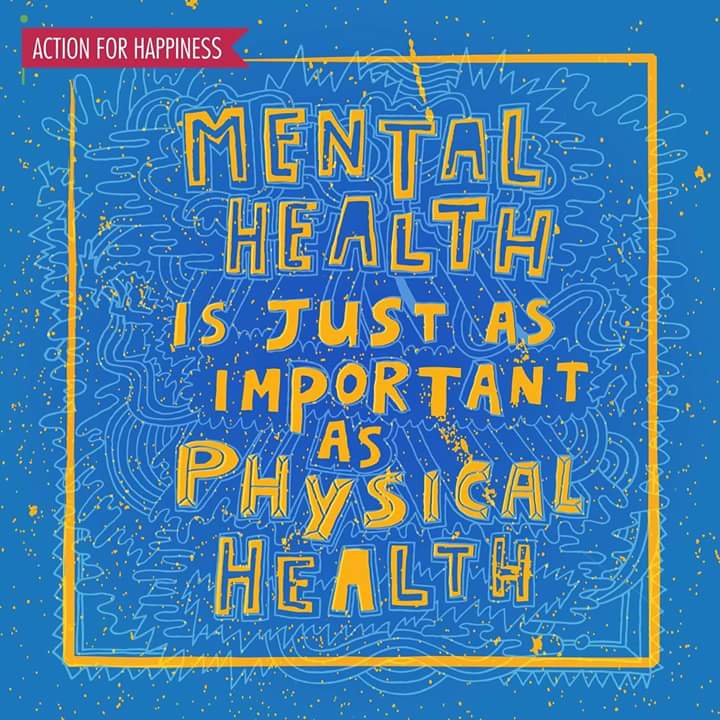
  • For me – physical wellness and mental wellness are closely linked. Small habits make a big difference to my mind-set.

15 Tips to Help Improve Mental Health

As part of Mental Health Awareness Week I wanted to offer some ideas of simple things you can do relating to fitness and nutrition to help improve your mental health and manage depression and anxiety:

1) Drink water

Most of us don’t drink enough water at the best of time and if you feel low the chances are you will drink even less. Fill a water bottle and sip throughout the day. Dehyration causes fatigue and has been linked to feelings of depression so drinking water is a cheap, low effort way of helping you feel a bit better.

2) Vitamin D

This can help make you feel better natutally. You can buy supplements, a light box, possibly use a sunbed or even better get outside and get some fresh air at the same time. Little effort required for a potential improvement in your mood.

3) Fish Oil

Omega 3 has been linked to improving symptons of mild depression. Make the effort to take a supplement each day – you can buy it in liquid form if you can’t swallow tablets (and are brave!). This was one simple habit that has worked well for me.

4) Eat regular meals

When you feel low eating proper meals at regular times can go out the window. Set an alarm for regular intervals and eat a small simple meal when it goes off. This will help stabilise your mood and create a feeling of routine and normality which can help when life feels like it’s crumblig around you.

5) Eat colourful food

Go to the shop and buy lots of different colourerd food. If you don’t feel like cooking buy prepared veg and fruit. Eating a variety of colours will mean your getting a variety of nutrients and will help improve your mood as well as your health.

6) Eat simple healthy meals

Eating healthy foods can have a dramatic affect on how well your mind feels. If I’ve had a bad week a simple healthy meal can help me feel more positive and in control of my own mind and body. It may sound stupid but when i eat well I feel like my body feels better and I’m looking after myself which in turn makes me feel brighter within myself. On days like this I won’t have the energy to cook a fancy meal so I go for a simple piece of salmon I can microwave or grill and a pack of microwave veg. 10 minutes to prepare a good quality meal.

7) Try some alternative meal prep

The holy grail of fitness freaks! Cooking is the last thing you want to do when you feel depressed. So if you find yourself having a good day make the most of it and prepare so batches of food that you can freeze. Then on days you just can’t face cooking you can defrost one of these meals and still eat something homemade.

8) Buy a slow cooker

Slow cookers allow you to make healthy tasty meals with little effort -and a casserole is brilliant comfort food. They are great for preparing a comforting meal without much effort and will make you feel better thab turning to chocolate and other quick food sources that we often crave when we feel low.

9) Drink less coffee

Adrenal Fatigue and depression / anxiety are linked. Too much coffee puts you at risk of developing adrenal fatigue – drinking less will help reduce stress levels. You could try a herbal tea instead which many people find helps then relax.

10) Walk

Getting outside helps you move more -that will help your mental health. Fresh air will help lift your mood. Being outside will help increase vitamin D intake. Walking can help clear your head. Walking is free. In short one of the best and most simple things you can do to help yourself.

11) Exercise

As I said moving has been shown to help manage many mental health issues. You may not feel much like it but it can be in any form and doesn’t need to be for long periods of time to help. Start small and build up as you start to feel like you can.

12) Dance

Stick music on and just move to the music. Music can improve mood as can moving which makes thos fun activity a win win mood boosting activity.

13) Try group exercise

Nerve wracking and requires motivation. Sounds awful if you aren’t having the best day. But if you can push yourself to walk into the room you can find exercise, motivation, good music and social interaction in one place. It’s hars to leave a class not feeling at least a little bit more positive than when you walked in.

14) Join a team or club

Another nervewracking idea. Another idea which will allow you to exercise which will help your mental health and get to meet new people, another great mood booster. It can also help boose confidence which will help your mental health dramatically.

15) Try yoga

A chance to challenge your body and stretch along with a focus on breathing and mental wellbeing. You could try a class or find a free video on You tube. You could do and hour or even 5 minutes. Whatever you feel like at the start there is an option you could try out and you may feel more relaxes by the end of it.

Do you have any other tips for improving your mental health?

It’s Good to Talk

This week is Mental Health Awareness Week and I’ve seen lots of people open up on Social Media about their own experiences in the hope that it may help encourage those who are currently suffering to reach out and seek help.

I love this. It’s such a positive thing to do and I try to be open about my own experiences with others as I believe that being honest about depression and anxiety will have a more positive impact than trying to hide it and allowing the stigma that still exists in some people’s mind to win.

I suffered with, first, anxiety and later depression for a long time until eventually it caused an almost complete breakdown of my life. I’ve spent the last couple of years slowly rebuilding and in many ways the experience has made my life better as I have a different perspective on many things now.

I have to be honest. I’ve had (and still have) set backs. Life generally throws up road blocks from time to time and trying to beat depression sometimes feels like taking two steps forward one step back. But there is help out there in lots of forms. Some things will work for you, others will not.

One thing I would say to someone who is suffering from depression right now and doesn’t think it can get better is to try everything suggested to you. Some things won’t make much difference (no one thing works for everyone) but something you try will help, and whilst it will take time, things can improve. Not overnight, but slowly they can get better.

There’a a chance you don’t believe me. I wouldn’t have believed me a couple of years ago. But to be honest if you’re currently suffering you don’t have much to lose from at least trying things.

This of course assumes you have reached out already.

And for a lot of people their mental health issues are made worse because they are dealing with stresses that nobody knows about. I know full well that just saying your problems and worries outloud is hard.

So the other thing I would say is talk to someone. Today, tomorrow – Find someone – anyone – and tell them what is causing the problem.

I eventually turned a corner by complete accident.

In a general chat one day I just suddenly splurted out everything that was causing my stress and anxiety. Once I started speaking it just kept coming and eventually I’d said outloud for the first time all my fears. I didn’t even know the person that well at the time.

It was the catylst for beginning to tackle the things that were causing the stress and drastically improving my mental health.

As I talked they didn’t react with shock or disgust. They listened and then we talked about it. Saying it and not being judged was the starting point that gave me the belief I could fix things and wasn’t a failure

It doesn’t matter who you talk to – a friend, family memeber or stranger. It will help reduce the load and allow you to move forward and start to improve your mental health.

Almost everyone is affected by Mental Health issues in some way at some point so if this week can remind us one thing it is to not be ashamed to speak up and ask for help.

Tomorrow as my own contribution to raise awareness (because it is a fitness blog!) I’m going to share my tips on how exercise and food can help improve your mental health – something that everyone would benefit from.

Today I cleaned the bath

I sat down this morning to write and couldn’t think of what to write about.

So I went and cleaned the bath instead. Then I cleaned the kitchen counters and mopped the kitchen and bathroom floors.

This took me about 20 minutes.

I never spend much more than 20 minutes a day on housework.

But everyday I do something – just 2 or 3 little jobs. I work long days but fitting 20 minutes in is doable. Mentally it barely feels like housework.

Dirt doesn’t build up because I keep on top of it.

I don’t have to spend hours on my day off cleaning from top to bottom.

Your training can be viewed much the same.

If you move in some way everyday you don’t need to spend hours and hours in the gym.

20-30 minutes regularly week in week out will keep you healthy, happy and keep you in shape without taking over your life.

3-4 days a week I either go to my work gym or run on my lunch break. Thirty minutes. Short, simple, intense – fits it nicely with the rest if my day.

Compliment rather than complicate your life -whether training or cleaning!

Motivation (and the weather)

I struggled to put my thoughts on paper today, so I recorded it instead.

https://youtu.be/L2C3O6mnNrE

This is just my opinion and some may disagree but hopefully you still find it a little interesting.

I’d like to stress that people train and eat certain foods for all sorts of reasons and I understand for some dissatisfaction is an excellent motivator – in which case why not stick with what works.

But i think positive motivators and choosing activities that you actually enjoy and fit into your life can have such an impact on physical and mental health.

It did for me.

Possibly the most girlie blog post I will ever write

Most days I train three times a day: before work, lunchtime and after work. This means twice a day I shower and get ready for work in a gym changing room. I normally have 10- 20 minutes do do this so I’m pretty used to getting dressed fast (and I’m probably at the low maintenance end of low maintenance to be honest – if you’ve met me you have probably seen me without make up on and almost definitely on a day when I haven’t brushed my hair).

So when someone said they couldn’t train at lunchtime because they wouldn’t have time to shower etc. afterwards it got me thinking who else is put off by this and I decided to list my tips for a quick no frills routine which might help anyone who wants to train around work but is put off by the post sweat grooming issue!

  • Pack your bag the night before so you know you won’t forget anything. When I forget my bra or one shoe it’s always because I’ve packed in a rush that morning.
  • Buy a camping towel- a) they are lightweight and fold up small b) They dry quickly and don’t retain water so don’t make your gym bag wet and heavy after use
  • Pack a wash bag with all the things you will need and it leave in your gym bag at all times – this is less than you think: shower gel (or not – some gyms have those little shower gel dispensers in the showers), shampoo, moisturiser, deodorant, toothbrush and toothpaste – anything else just adds unnecessary time
  • Minimise your routine as much as you can – quick shower, 2 in 1 shampoo and conditioner – if you have to wash your hair (I’m not so much of a tomboy that I’d go as far as suggesting combined body and hair wash but to be fair it is an option)
  • Baby oil is great as moisturiser – makes your skin super soft but much quicker than a lotion as you can put it on whilst your skin is still wet
  • Baby wipes and dry shower gel (it exists- try Boots) are great cheats if you didn’t do too much cardio – you will know if you can get away with this or not on any given day (more often than not the answer is no but they are useful for emergencies none the less)
  • Dry shampoo is also your friend. As are high pony tails/ the scraped back / Croydon Facelift pony tail.
  • You actually need to wash your hair less often than you think even after training. Give it twenty minutes and it will dry out and won’t actually smell – I wash my hair maybe 2/3 times a week max.
  • Don’t waste time doing the towel dance. All women know what the towel dance is and quite frankly it’s a waste of time. A) Nobody is looking at you and b) you normally end up being naked and more exposed for longer whilst trying to put your knickers on balancing on one leg and holding a towel round you than if you just got dressed.
  • Whilst I’m at it – do not be one of those people who gets dressed in the shower- you will get your clothes wet and you are holding up the people waiting.
  • Pack clothes which don’t crease – I’m fond of lycra.
  • If you can get away with not wearing tights you will save at least five minutes- putting on tights when you’ve just exercised is almost as much exercise as taking your sports bra off after a session.
  • You don’t need to put on lots of makeup after a workout- keep it minimal and take advantage of the natural glow your skin will now have to speed up the process of putting on your make up
  • Get your eyebrows and eyelashes tinted if having a bare face isn’t an option – this will save valuable drawing on yourself time!
  • Work out what your gym has in the way of hairdryers – if they have them don’t pack one! I personally don’t blow dry my hair as it dries by itself in about 15 minutes but I’m led to believe that’s not usual.
  • Do you actually need to straighten your hair?

Getting ready for work is dull and should take as little time as possible anyway – don’t let it stop you from getting a workout in – life is too short.

Note: This is a bit of a blog for the girls really- I’m going to assume most men are pretty much wash and go anyway but if not please re-read the above!

Overtraining

I had my blog post ideas for the week all lined up.

But I’ve changed my mind.

Instead I want to talk about overtraining.

Overtraining is a strange concept- especially if you talk about it to non gym goers. To those who don’t live in gym land – If you are someone who would like to visit the gym regularly but never quite manage to fit it into your routine – the idea that you can train too much is a bit odd. When you first get into training the idea that more and more and more isn’t necessarily better is confusing.

If you train daily (or almost daily) however overtraining is a real thing.

And the problem is you don’t normally realise this until you have overtrained.

Feeling drained, an increasing number of aches and pains, muscle soreness that won’t ease, a drop in performance, insomnia, headaches, irrationally hating everyone around you, irritability, feeling run down or even poorly, losing all motivation to actually train. These are all signs of overtraining.

Overtraining can cause real damage to your body and take a long time to recover from if you push too hard for too long. Once you’ve overtrained once though and are aware of the signs you can be smarter about spotting it early and acting before you are hit by lots of negative effects.

If you’re really smart you’ll cycle your training so you have periods of intense work followed by lighter weeks, with different focuses so the body can recover. This will reduce the risk of overtraining and allow you to get better results.

Even if you do this however sometimes you will still hit a wall. Just out of nowhere. When you do you need to listen to your body and adjust your routine and recover. This might mean adjusting your goals a little but will also mean you can continue to improve rather than stagnating and becoming the grumpiest person in existence.

I have just had a couple of light / deload weeks. I’ve been learning new choreography for classes and this and all the associated adrenaline rushes take it out of you so my own training has been deliberately lighter. I’d dipped a bit but thought I’d recovered well.

Despite this on Monday when I almost burst into tears for reasons known only to my hormones (and possibly related to severe tiredness caused by a day of 9.5 hours in an office, a spin class, a Body Pump class, a HIIT class and a 4.5km run) I knew I was possibly at the point of having over trained. When people start asking if you are being irrational again and when you’ve eaten 3 slices of chocolate cake in one day, that’s also another clue that perhaps you need a break!

So I’ve pulled back a bit for a few days. I’ve taught my classes and done some light stuff in the gym just to keep moving but reduced intensity dramatically and have booked Friday off work to have a lie in and just generally slow down the pace. I don’t think I have reached the point of actually having overtrained but I might have physically done a bit too much recently.

I think when people think about overtraining often the question is ‘how do I know if I have’? I’m not an expert but my thought process is if you are questioning whether you have overtrained chances are you have or are seriously close to it.

Caring less about labels and symptoms and just listening to your body and reacting to what you feel can make a world of difference in staying physically and mentally well.