What is and isn’t Role Model for a Fitness Professional / Brand

As a fitness instructor or PT, how does your own lifestyle and physique matter?

In recent months I have seen so many Facebook posts debating this issue in a variety of ways and from a wide range of perspectives:

  • From an individual instructors point of view does it matter if you are, in less than perfect condition? What does out of shape even mean? What is too big or not fit enough? Can you go the opposite way and be intimidating or make people feel bad because of your physique or fitness? Is your lifestyle role model material and how do you balance your own real life situations with clients expectations of you?  Does any of that even matter or should people just mind their own business?
  • For Fitness brands – How should you select people to represent your brand? Should everyone look the same or should diversity matter? If diversity matters should that trump their ability to do the job?  Are there some shapes that should not be represented no matter what public opinion says because they do not fit your brand or what you want to represent (perhaps you view them as unhealthy)?

For myself I have been overweight, I have been very skinny and am now less skinny, more lean.  I’m not the strongest person in the world but could be described as reasonably strong.  I’m definitely a work in progress.

I have had a lot of positive feedback from members over the last year as they have seen my body become leaner and more muscular / defined.  I work in a gym where there are already instructors with very good physiques (far better than mine) who definitely inspire a lot of members.  Equally however for many (particularly females) seeing my shape change has created a dialogue about how I’ve done it and hopefully created a positive message that progress takes time and patience and doesn’t just happen overnight.  So for me for every member / client who wants their instructor to look like a Greek God there will be others who find more motivation from somebody who seems to be working on their own fitness at the same time. Likewise, I think people generally appreciate that instructors have real life problems too and perhaps they have been injured or ill and are coming back from that and may not be in their peak shape – that in itself can provide motivation and inspiration to people.

Physically therefore I think fitness instructors can be positive role models regardless of physique.  Here I think the most important element is how we promote health and fitness.  I tend to be about balance – we want to eat well and exercise  to feel good and give us energy but we have to allow ourselves room to live too, and unless we are training for a very time specific goal 80/20 is a good rule to live by.  How should you find that balance? For me there isn’t a right or wrong answer- what works for me may not for someone else.  If we promote sensible healthy habits and show that we live by these rules I think we are decent role models – why pretend we never let a cake or glass of wine pass our lips and provide people with unrealistic expectations for themselves, which just set them up for failure.  If we preach moderation but then over train ourselves or say you should eat everything in moderation but dangerously restrict our own calorie intake i don’t think that is great role modeling.

I think for fitness brands this issue is far more complex but the importance of presenting positive role models becomes even more important as these people will have greater exposure than your average fitness instructor.

These brands are businesses so how they select the people who will represent it naturally will depend on and reflect their values.  For some people diversity seems to be the key – customers want to see a mixture of ages, sizes, backgrounds to make a brand feel inclusive- they want to feel represented.  I tend to lean more to the school of thought that people should be selected because they are the best people for that job – not because they tick a box on an equality drive.  Yes sometimes this means that some groups are under represented but this highlights the issue of why some groups are more or less likely to succeed in certain roles (e.g. why there tends to be fewer women on boards in business etc.) .  Of course if people who are perfectly good for a role are overlooked because they are deemed too old, not skinny enough not attractive enough this would lead me to question that brands values.

It’s actually a more important marketing point than the mere morals of employment law however.  If you area large brand with a big following the type of people you choose to represent you say something about your beliefs.  Can you truly promote inclusivity and everyone being welcome in your world / sphere of the fitness arena if everyone who represents you is a size 8 and under 30? Do these people provide motivation – an inspirational image of what can be achieved? Or does it suggest to customers who are older or larger that they are inferior / do not fit in?

I appreciate this is difficult because if you are good enough to represent a big brand you are possibly at the top of your game – if you are at the top of your game are you therefore likely to be a certain age and size? Or does this train of reasoning exclude the fact that peak fitness isn’t limited to one size / shape / level and therefore there should be more diversity to show a variety of people a variety of ways they could work towards their fitness goals?

Finally, there is one particularly sensitive subject – regarding those people who are very very slim. I say this is sensitive as, the way I see it, there are different reasons someone could look very skinny.  Some people are naturally very slight- they can try all sorts and struggle to put on weight- should these people be prevented to rising to the top of their fields any more than someone who naturally carries weight and find it hard to lose it?  Some people this size however, will be small because they restrict their calorie intake in a way that is not healthy to promote.  Is it responsible of a brand to allow these people to be presented to potentially susceptible customers as role models?  How does one distinguish between the two?  How do you stop the audience from trying to aspire to a physique that may only be attainable to them through starvation even if the person in question is just naturally built like this (it’s a similar debate to that of the Supermodel one which has been ongoing for years)?

On the same token, is it therefore also irresponsible to promote people as role models if they are overweight?  Does this equally imply that this is a healthy aspiration?  Is this balance between not wanting to encourage people to be stick thin or overweight the reason that for some brands everyone ends up looking the same?  Is it possible to strike a balance?

To be honest whilst I know where I stand on individuals instructors being positive role models for their clients / members I’m not sure which side of the fence I sit for brands.  I am torn between wanting more diversity in who is represented within the industry but also against a drive for diversity topping all other aims within fitness.

I do think that in an industry that is largely focused on aesthetics this type of debate is unlikely to ever be settled.

What happens at Tribal Gathering … goes on my Blog

My plan was to take a photo diary of what really happens at a Tribal Gathering whilst at the Liverpool Tribal Gathering this Saturday.

Turns out I’m rubbish at taking photos though and then even more rubbish about getting around to using them.

So here is the written version of what a Tribal Gathering / One Live / Les Mills Live/ GFX is really like:

  • You will start the day in your best Reebok, hair washed cleaned and down (maybe straightened), there may be make up- all of this will last approximately one track into your first class.

  • After this it’s endless top changes and baby wipe showers and an increasingly messy pony tail – depending on your mascara choices you may end up resembling Alice Cooper.  The toilets start to resemble your bedroom

20170804_143621[1]

  • Except for some girls who somehow manage to maintain perfect hair and make up even as they are coming out of a GRIT session – these people are aliens
  • There will always be ladies cooking small humans who make exercise look more effortless than you do (respect here!)!

20170804_071608[1]

  • Noone wears Nike… or Adidas
  • In fact 90% of people will be in not only Reebok but the exact same outfit- picking people out of a crowd will be like playing Where’s Reebok Wally
  • Body Pump is the first class of the day… for everyone… it’s the law. Unless you opt for Body Balance first… the Body Balancers are odd and us Pump people don’t really understand them… why would you stretch at the start of the day?????

20170804_070922[1]

  • Everyone has a Polar or Fitbit… otherwise I’m pretty sure your training doesn’t count
  • Everyone will have a bag half the size of them. It will contain every piece of gym kit they own plus enough food to feed a small nation
  • Bumbags and bands on water bottles- say no more

20170804_063938[1]

  • Everyone brings some form of sweets- Jelly babies, Haribo, pic n mix… it’s actually the law to consume sugar on days like this (normally whilst sat on the floor exhausted by life)

20170804_105133[1]

  • 20% of your day will be taken up with eating said sweets plus buying and inhaling coffee
  • We gather in packs for this refueling and create much mess

20170804_103312[1]

  • You spend another 20% of the day running past people you haven’t seen for months whilst yelling greetings
  • With the odd catch up towards the  end of the day when you’re now too tired to dash to classes and accept you might be late for Combat

20170804_144520[1]

  • Another 20% is taken up with selfie taking (often on other people’s phones ahem)

20170804_094902[1]

  • There obviously also has to be a picture on stage after a class so it looks like you just taught it… here’s Lou pretending she just taught Sh’bam….

20170804_094928[1]

  • 10% of your time is spent trying to work out where room 2 is
  • In the rest of your day you may do some classes! Perhaps … just one or two…. Or y’know – 5…
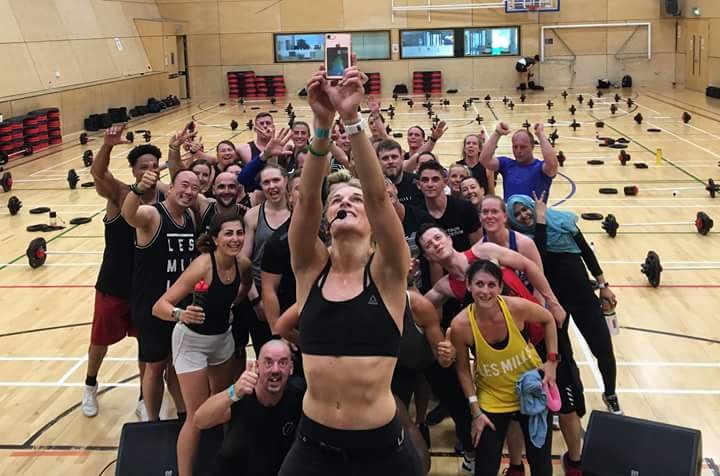
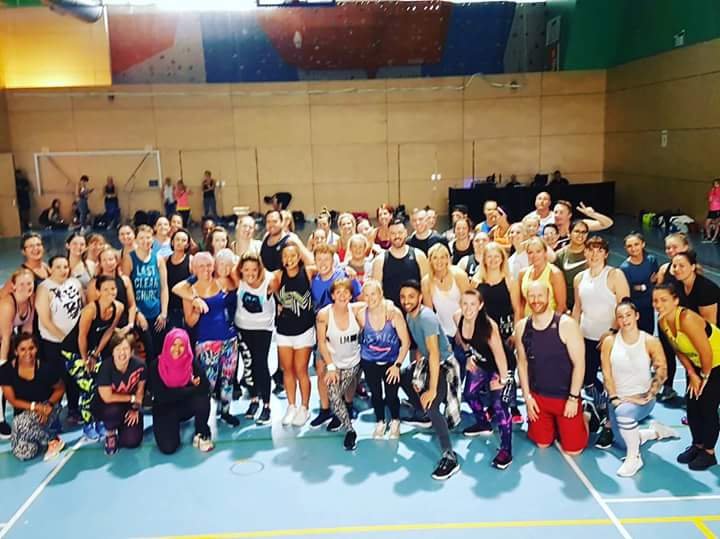
  • Then you will get the required group selfie- otherwise you put all the calories just burnt back on plus 10%

  • If you’re me you will not do a single class you booked onto but end up in random things like Barre because you got over excited and followed someone. You may not even know the person you followed
  • You meet at least one person for the first time even though you’ve been Facebook friends for 3 years
  • You find out your friends have hidden talents during Sh’bam then force them to perform for you whilst you take photos

20170804_094706[1]

  • All of this is done in the knowledge that you will be able to eat the mother of all cheat meals that evening (before the cake in this bag I had an immense hot dog and chips!)! All fitness instructors basically train to eat.  If they tell you they don’t they are lying.

20170804_191857[1]

My Beginners Guide to Dance Classes

I teach Zumba and Les Mill Sh’bam. I’m not a natural dancer but that’s ok. I think I’m actually an excellent example of how anyone can enjoy dance based exercise classes.

I’ve written in the past about how classes that look tough can be scary to start- but I totally get that for many dance classes are maybe even more off-putting. A lot of people put themselves into the two left foot category and think they will look stupid.

But – hand on heart these classes are so much fun.

Tough day ? Try going to a dance class and I challenge you not to leave smiling. The benefit of having exercised is almost just an added bonus.

So if you’ve been debating giving a class a go but haven’t been sure here’s my what you need to know tips so you walk into the room with some idea of what to expect (because let’s face it the unknown is always the scariest thing)

  • First – Don’t worry about whether you think you can dance or not – just go and try
  • This isn’t going to be learning a complicated routine to perform in front of your friends and family this is using dance moves to get the body moving and the heart rate up to burn calories and feel healthier and fitter
  • It is still exercise so you may find the odd squat disguised as a dance move – it will help you tone up without even realising!
  • Nobody cares what you look like – the other participants are going to be too caught up in what they are doing to watch you
  • Likewise – there is a lot less technique to worry about in dance classes than some other classes out there so the instructor probably won’t mind if you are freestyling or doing something differently to them!
  • It’s supposed to be fun – you are allowed to smile!
  • If you get a move wrong you can just laugh and carry on – honest
  • No instructor I know takes these classes so seriously that they will be offended if you freestyle a bit- if you aren’t sure about a move do whatever feels right to keep dancing – If you love a part of a track and go want to add your own style – do it. In fact I love it when regulars bust out their own moves on certain tracks
  • Don’t think you won’t sweat- it sounds bonkers but my Fitbit normally tells me I’ve burnt more after teaching Zumba or Sh’bam than Body Pump! I put this down to enjoying it so much I forget how hard I’m working and so keep the energy high all through the class. It doesn’t mean you are unfit – it means the class is working as it should!
  • Like all classes there are levels you can take. If your new or have any little niggles(back, knees etc.) you can walk moves through and take out the jumps (in fact you can do this just to get used to the class)- as you get more used to the routines you can take the energy as high as you like
  • Don’t worry if everyone seems to instinctively know the moves and you feel like a fish out of water- we tend to repeat routines so regulars will know what’s coming – in a few weeks time you will too and the new person in the class will be looking at you thinking how do they know what’s coming!
  • You can wear any gym kit that feels comfortable – do wear trainers though. We will not let you join in in bare feet (unless the class specifically says it is to be done this way!) – this is to stop you getting injured so don’t be offended by this

So which class should you choose?

I am obviously a bit biased towards the ones I teach! Honestly though – best thing I can suggest try all the ones on offer at your local gym and see which one you enjoy the most. There’s so many different styles there will be one for you and the best way is to give a few a go.

Your options include:

  • Zumba – probably the best known dance class. These classes are all based on some key steps and contain a mixture of international music and rhythms. Each song is its own little self contained routine. The instructor won’t speak but will direct you with hand gestures and their movement. Every instructor will put their own spin on the class and prepare their own routines so if you can try a few different instructor’s classes to find one you gel with – and be aware if you go to someone elses class it may feel like starting Zumba all over again a bit!
  • Les Mills Sh’bam – Different to Zumba in that it is choreographed, so whilst every instructor will bring their own personality, whichever you do it the moves will remain the same. New routines are introduced every three months for variety and there will be a variety of styles of dance and music but again each track will be it’s own little self contained routine – normally containing a couple of basic steps which are built up into a little dance combination.
  • Les Mills Body Jam- Another pre choreographed class which means it will be the same whoever takes the class. Unlike Sh’bam and Zumba though this class builds up into one big routine. Each track will focus on one part of a routine which you dance through towards the end of the class. Slightly more dance focused whereas the moves in Zumba and Sh’bam tend to be more dance based exercises (in my opinion)
  • Freestyle – Classes where the instructor designs the choreography and may use a mixture of styles or specify a type of dance (e.g. Street Dance) – these will all be different so don’t let one put you off trying another until you find your fit.
  • Other choreographed classes e.g. Beachbody Cize, SOSA Dance – all with their own style and formats.

As well as being great exercise these classes can be freeing and massive mood boosters so I’d urge you, if you’ve been thinking about it, to give it a try. Remember nothing you do will be wrong and anything goes and just have fun!

What (I think) you need to know before you do your ETM / First IMT

I don’t mean how the course is structured, what it will cover or what you need to do to pass.

This isn’t what you need to know.

I mean the important things – the things no one tells you – the things I wish I’d have known the first time I went on each of these!

ETM

  • You will spend approx 6 weeks grapevining. Constantly.
  • To bad music.
  • And by bad music – I mean the type of music I love- I loved the sound track for my ETM. I believe I am in a minority of one on this.
  • You will get DOMS – specifically in your calf’s (blame the above grapevining).
  • On day one you will realise that moving to the beat is one thing. Talking at the same time? Different matter.
  • It’s ok though because on day 2 you’ll start to get the hang of this.
  • You will start putting together your assessment class and decide a knee repeater is the best move ever and design your whole routine around it. It’s going to b the most creative ETM routine EVER. A masterpiece.
  • Then you’ll realise how hard it is to find five progressions for a repeater knee and pick another move. Any move.  Probably the box step.
  • In fact you will have a grapevine and box step in your routine – I’m willing to put money on it.
  • The practical days are long.
  • On day one you will take a packed lunch of spinach and carrot juice. Because fitness instructors are healthy.  And role models.
  • On day two you will take bread and Haribo. Because bread and Haribos will ensure your survival.
  • You will start to consider injecting coffee into your eyeballs as the weeks progress.
  • You will bribe friends into letting you practice on them.
  • They will tell you how amazing you are doing. Even though you’re still shit at this stage.
  • You will cry. At least once.
  • And by once I mean probably at least once a day.
  • On the assessment day you will do your assessment plus take part in several others. Everyone there will be slightly shell shocked with how hard 3 hours of old school aerobics actually is.  I return to your calf’s.  You will probably cry.

IMT (Les Mills)

  • You will spend more time learning your allocated track than you ever spend learning entire releases going forward.
  • You will write a script that Shakespeare would be in awe of ahead of your first presentation.
  • During the first morning you will realise you need to say completely different things to what you’ve scripted and have to start again.
  • You are going to have to introduce yourself and your mind will go completely blank when you try to recall an interesting fact about yourself. Everyone else will do the same and you will think you are the most boring group of people in existence.
  • You will remember the magic powers of Haribo (pic n mix also works well as do Jelly Babies) from ETM and will have come prepared this time.
  • Remember coffee? Yep still vital.
  • You probably signed up to do this course because you thought you were OK at the class right? Wrong – the technique session will convince you otherwise.
  • You will second guess any answer you go to give to any question – What is a layer 1 coaching cue for a squat? What would you say in a class introduction for Body Combat? What is your name? No idea mate.
  • You will feel like you are about to fall asleep around about 3 pm both days – hello Haribos.
  • You want to be perfect. You will panic because you aren’t – you will probably not pass because you definitely don’t move like Lisa O or Rachel.  You do not need to panic about this.  I mean you don’t move like them but you don’t need to.
  • There is an exam on Les Mills on day 2 (kind of)!
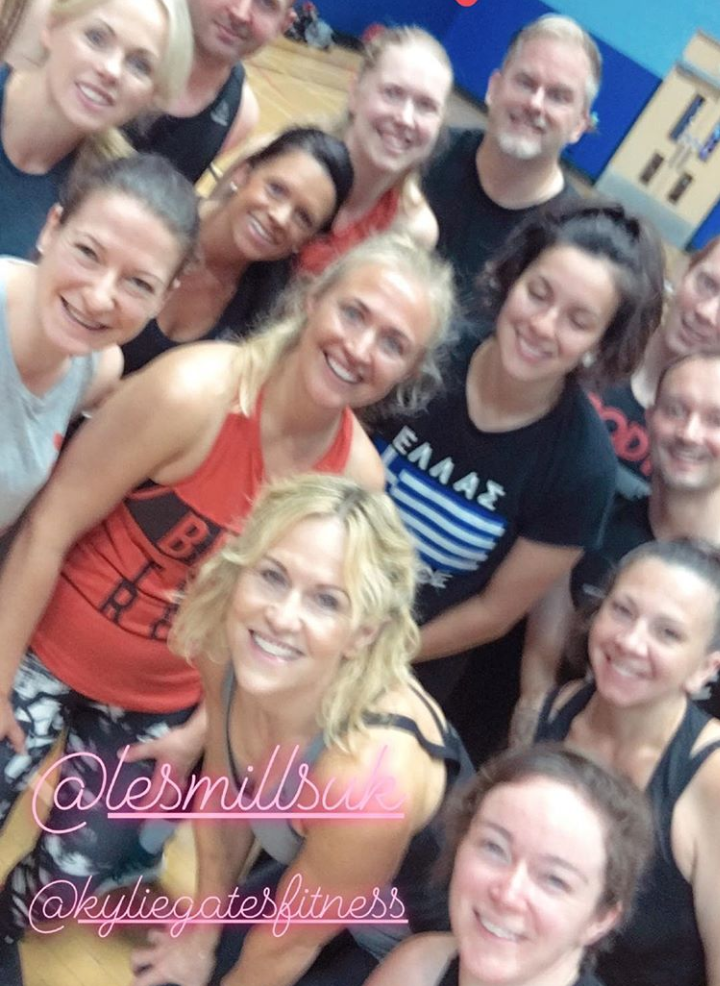
  • You are going to have to get used to group selfies. Because these are part of instructor life and if you don’t have a selfie at the end of a course they don’t update your result on the portal so

DVD Submission (Les Mills)

  • Passing the IMT will definitely be the hardest part right? Erm sorry mate but no.
  • Nobody likes filming for certification – but there’s no way round it, not even bribery, I’ve tried!
  • You will practice and script this release to the point you will be able to teach it off the cuff for the rest of your natural life- and probably for several years after you die.
  • Then as soon as the camera is on you will mess up the first rep of the warm up. Even though you can teach this in your sleep.
  • You will film on average 276 times before you are happy with it to submit for your first programme. This number reduces dramatically as the number of programmes you teach grows.
  • Someone will walk in half way through the warm up. They will probably position themselves in front of the camera.
  • It is the law to wear full on Reebok for these filmings. If you wear Combat gear for a Pump DVD or vice versa you will be put on a special watch list and may not pass.
  • The camera will probably stop recording half way through the class- this will be the class that is perfect and you would have definitely submitted on.
  • It may take you several weeks to get a filming you are happy with. It will then take you six months to upload it onto the portal.
  • During this time you will come across Jon from the office. We like Jon.
  • When you pass if you don’t post your certificate on Facebook with an Oscar Style thank you speech they withdraw certification (perhaps).

*Please note some of this “may”be a bit tounge in cheek

15 things they should tell you on your first Group Ex training course:

15 things they should tell you on your first Group Ex training course:

  1. Someone will always think the music is too loud. The person next to them will probably think it’s too quiet.
  2. Regulars will have their spot – everyone who does classes has a spot – and if they change spot one day it will probably throw you off kilter so much so you forget how to teach.
  3. Your hair washing standards will drop dramatically. Before teaching “I wash my hair every time I exercise.” Now, “I washed my hair 15 classes ago and it is now held together by dry shampoo – and I’ll still get another 2 classes out of it yet .”
  4. You will never have an empty washing basket. Ever again. Never. It’s not possible
  5. Every song you ever hear from here on in, you will either have choreography in your head you want to do to it, or you will try to fit your own choreography to it.
  6. The air conditioning will nearly always be broken- get used to it.
  7. If the air con is working the mic will probably not work.
  8. If the mic is working you probably won’t have enough weight plates… or clips… or steps.
  9. Gyms don’t like it if your classes are under subscribed. But they also get annoyed if you let too many people in!
  10. You will now need to carry every size battery and type of aux lead known to man with you at all times and will be that weird person that when someone say I don’t suppose anyone has a AAA battery you can produce 20 from the bottom of your handbag – even though your actually in the pub at the time.
  11. Music systems are confusing.
  12. You will never again be able to provide directions as left and right become meaningless due to the fact you’re not quite sure if you are referring to instructor left of real life left anymore in any given situation.
  13. The person who teaches the class before you can make or break your spirit – don’t be the person who runs over by 20 minutes every week and leaves a pool of sweat on the instructor spot for the next instructor to find… or the one that adjusts every knob on the stereo and hides the mic!
  14. You will end up being in 100 different local cover groups and everytime someone posts you will see the same request 89 times across these various groups.
  15. And you probably won’t be able to cover – mainly because the person has forgotten to mention where the cover is need… or at what time.

Body Pump Aim 1 Take Out: the content is more interesting than the title I promise

This weekend I re-did my Body Pump Aim 1.

If you aren’t a Les Mills instructor – Aim 1 is effectively a one day upskill where we look to improve our own technique and our coaching. We also teach a track twice during the day and get feedback.

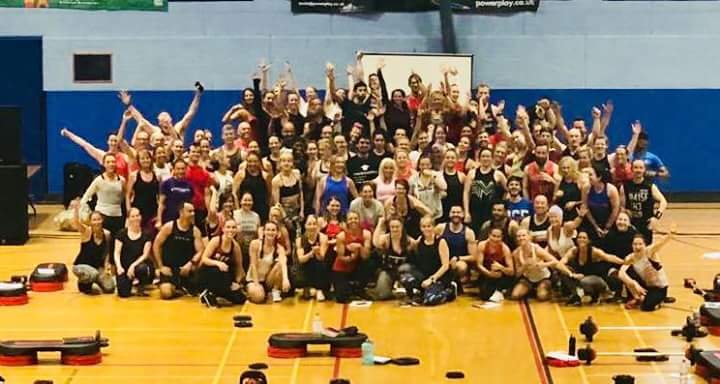
Normally one of the UK trainer team takes the course and there are around 5-15 people in attendance. This one was a bit different because the Creative Director for the programme, Kylie Gates, had travelled over from New Zealand to lead the day along with several UK trainers and there was over 100 people in attendance who has travelled to Woking (Surrey apparently!) from all over the country.

There are so many things from the day I could write about so I may revisit the day in more depth again in future blogs when I’ve had more time to process the information, but I wanted to touch briefly on a few of the things I took from the day.

Body Pumper or not these things apply to everyday life.

Own your Strengths

We tend to be very quick to look to our faults. When we review our performance in most things in life we look to what we could have done better or where we need improvement. That self awareness is great for self improvement but we also need to look at what we do well, the skills where we own it, our strengths; because when we work towards these strengths we can get the best results possible.

This isn’t being vain and thinking we are better than others or have no faults, just being aware of what we do contribute and do well. I have recently been working with someone who’s strength are very different to mine – I would say we are both aware of each others strengths and we work accordingly – as a result we get more done and we get it done well.

Know you purpose

Why do you do whatever you do? What do you want to get out of it? What do you contribute to the world?

When you know this it can shape how you approach your work and your interactions with people. Until recently I didn’t really know – I kind of just bobbed along. Now I have a clear vision of what I would like to do ultimately and why I want to do it.

Placing that at the centre of how you interact with others can both enhance your relationships, create meaningful connections with people and make it easier to start working towards your goals.

Be present

We generally aren’t great at hearing. There is a difference between listening to someone and hearing what they are saying, making an effort to understand what they are saying and where they are coming from.

One of my pet hates is when someone asks you a question then ignores the answer. Either interact with my response or don’t ask to start with – because asking me a question but not listening to the answer makes me feel irrelevant to you. Whether it is a personal or professional relationship, nobody likes to feel irrelevant.

Yet we all do it to varying degrees – we are busy and feel like we don’t have time to focus on the person we are talking to. When you say it like that it actually sounds as crap as it can make people feel!

We did an exercise where we had to listen to our partner speak for 60 seconds without responding or interjecting – do you know how hard that is!?

I’m taking away from the day that I need to get better at this – if I’m talking to someone they are to be my focus and I need to be present in that conversation rather than mentally multitasking. One thing I noted from talking to Kylie was that when she spoke to you it felt like she was focused on that conversation – like it was important- and that makes you feel more positive. I want people to feel more positive from talking to me.

When you have passion for what you do it’s easy to find your ‘people’

This is possibly the cheesiest thing I’ve ever written (I’ve almost made myself throw up a little) but it’s actually very true.

When the tickets for this event were put on sale I wanted to go but was aware that the distance from Manchester meant it would be expensive. A friend of a friend who also teaches Pump was in the same position – we had come across each other in Facebook groups but never met – so we decided to share a hotel room to reduce the costs.

Some people thought the idea of sharing a room with, effectively, a stranger was weird, and I think we would both admit that we were a little nervous beforehand. In the end it didn’t feel strange at all. We slipped easily into conversation and it felt like we had known each other for ages.

It shows that when you share the same interests and goals with people, it’s easier to feel comfortable with them and like you belong.

Gym Pet Peeves…

In no particular order…

  1. People who hog EVERY SINGLE DUMBBELL for their workout and almost faint with panic if you ask to share.
  2. People who make dramatic noises whilst lifting. I get the impulsive random noises as you struggle to reach the end of the set. It’s the grunting like Monica Seles everytime they do a rep I don’t get.
  3. People who come to the gym in normal clothes. Does anyone realy think it’s ok to exercise in jeans, shirts and loafers? Apparently so.
  4. People who get dressed in the shower- yes there is a queue so, no, spending 20 minutes moisterising and putting on your tights when you could do that in the changing room itself is not good etiquite.
  5. When people try to come into the studio during a class to do their own workout – why would you think this is ok, I’ve never understood?
  6. People who make fun of or act superior to others in the gym. I don’t get why people do this- we all started somewhere and it takes literally no effort to just be nice (or say nothing at all). Women should feel welcome in the weights area, everyone should feel comfortable in the dance studio – there should be no off limit areas for anyone (ok maybe men shouldn’t go into the ladies changing rooms…).
  7. Gym’s which do not know about the products they offer and the benefits. In an ideal world all staff would have a basic idea of what classes are on and what they are about so they can accurately inform members. We do not live in an ideal world.
  8. Fitness professionals who present other classes or methods of training in a negative light. You may well think that yoga is pointless and that’s your opinion – but as a member of staff (freelance or not) don’t tell the members that. It’s just basic professionalism. You can give your opinion but position it so it doesn’t trash another professional.
  9. There are never enough free weights.
  10. Not enough gyms have running tracks.
  11. Ladies only areas in gyms. 1. If there were men only areas we would cry sexism. 2. They are always crap, with random bits of equipment they class as ‘girly’.
  12. Gym cafes which only sell junk food.

15 Tips to Help Improve Mental Health

As part of Mental Health Awareness Week I wanted to offer some ideas of simple things you can do relating to fitness and nutrition to help improve your mental health and manage depression and anxiety:

1) Drink water

Most of us don’t drink enough water at the best of time and if you feel low the chances are you will drink even less. Fill a water bottle and sip throughout the day. Dehyration causes fatigue and has been linked to feelings of depression so drinking water is a cheap, low effort way of helping you feel a bit better.

2) Vitamin D

This can help make you feel better natutally. You can buy supplements, a light box, possibly use a sunbed or even better get outside and get some fresh air at the same time. Little effort required for a potential improvement in your mood.

3) Fish Oil

Omega 3 has been linked to improving symptons of mild depression. Make the effort to take a supplement each day – you can buy it in liquid form if you can’t swallow tablets (and are brave!). This was one simple habit that has worked well for me.

4) Eat regular meals

When you feel low eating proper meals at regular times can go out the window. Set an alarm for regular intervals and eat a small simple meal when it goes off. This will help stabilise your mood and create a feeling of routine and normality which can help when life feels like it’s crumblig around you.

5) Eat colourful food

Go to the shop and buy lots of different colourerd food. If you don’t feel like cooking buy prepared veg and fruit. Eating a variety of colours will mean your getting a variety of nutrients and will help improve your mood as well as your health.

6) Eat simple healthy meals

Eating healthy foods can have a dramatic affect on how well your mind feels. If I’ve had a bad week a simple healthy meal can help me feel more positive and in control of my own mind and body. It may sound stupid but when i eat well I feel like my body feels better and I’m looking after myself which in turn makes me feel brighter within myself. On days like this I won’t have the energy to cook a fancy meal so I go for a simple piece of salmon I can microwave or grill and a pack of microwave veg. 10 minutes to prepare a good quality meal.

7) Try some alternative meal prep

The holy grail of fitness freaks! Cooking is the last thing you want to do when you feel depressed. So if you find yourself having a good day make the most of it and prepare so batches of food that you can freeze. Then on days you just can’t face cooking you can defrost one of these meals and still eat something homemade.

8) Buy a slow cooker

Slow cookers allow you to make healthy tasty meals with little effort -and a casserole is brilliant comfort food. They are great for preparing a comforting meal without much effort and will make you feel better thab turning to chocolate and other quick food sources that we often crave when we feel low.

9) Drink less coffee

Adrenal Fatigue and depression / anxiety are linked. Too much coffee puts you at risk of developing adrenal fatigue – drinking less will help reduce stress levels. You could try a herbal tea instead which many people find helps then relax.

10) Walk

Getting outside helps you move more -that will help your mental health. Fresh air will help lift your mood. Being outside will help increase vitamin D intake. Walking can help clear your head. Walking is free. In short one of the best and most simple things you can do to help yourself.

11) Exercise

As I said moving has been shown to help manage many mental health issues. You may not feel much like it but it can be in any form and doesn’t need to be for long periods of time to help. Start small and build up as you start to feel like you can.

12) Dance

Stick music on and just move to the music. Music can improve mood as can moving which makes thos fun activity a win win mood boosting activity.

13) Try group exercise

Nerve wracking and requires motivation. Sounds awful if you aren’t having the best day. But if you can push yourself to walk into the room you can find exercise, motivation, good music and social interaction in one place. It’s hars to leave a class not feeling at least a little bit more positive than when you walked in.

14) Join a team or club

Another nervewracking idea. Another idea which will allow you to exercise which will help your mental health and get to meet new people, another great mood booster. It can also help boose confidence which will help your mental health dramatically.

15) Try yoga

A chance to challenge your body and stretch along with a focus on breathing and mental wellbeing. You could try a class or find a free video on You tube. You could do and hour or even 5 minutes. Whatever you feel like at the start there is an option you could try out and you may feel more relaxes by the end of it.

Do you have any other tips for improving your mental health?

Motivation (and the weather)

I struggled to put my thoughts on paper today, so I recorded it instead.

https://youtu.be/L2C3O6mnNrE

This is just my opinion and some may disagree but hopefully you still find it a little interesting.

I’d like to stress that people train and eat certain foods for all sorts of reasons and I understand for some dissatisfaction is an excellent motivator – in which case why not stick with what works.

But i think positive motivators and choosing activities that you actually enjoy and fit into your life can have such an impact on physical and mental health.

It did for me.

HIIT: What, Why, How


High Intensity Interval Training (HIIT) has been big in gym land for a while now.  Most people who train will have probably tried to incorporate some form of HIIT training into their programm

The main selling point to HIIT is it can provide maximum benefits in a relatively short time period.  It consists of short maximum effort bursts of work repeated with even shorter periods of rest in between.  Generally, a HIIT session would take no longer than 20 – 40 minutes and you can do almost any type of exercise depending on what your focus is that session.

Pros to HIIT training include:

  • Increased fitness – stamina, strength, endurance, agility etc.
  • Promotion of muscle growth due to the increased production of testosterone
  • Increased fat burn
  • Calorie burn not only during the workout but also for several hours after

With the rise of HIIT training within the gym it is natural that HIIT based classes have also become popular and are a great place to try this type of training out, so if you are thinking of trying a class here’s some pointers on what’s out there and what to expect:

  • The number of different options is huge! You could try Les Mills Grit Series, Beachbody’s Insanity, Mettafit, Virgin’s Twentyfour to name a few.  Most gyms will also have freestyle HIIT classes on their timetable (under the name of HIIT or Extreme Intervals or similar)
  • Many HIIT classes will be based around body weight exercises but not all will (Les Mills do a GRIT Plyo and GRIT Strength which used benches and barbells), I do HIIT Group Cycle classes.
  • They are designed to be hard and push you to your limit. People worry about going to classes that look ‘hard’ because they fear they will look unfit.  The truth is as you get fitter you should be pusher harder so the class should always feel ‘hard’.
  • Another truth is that nobody will be looking at you. It’s human nature to be a bit nervous about the potential embarrassment of doing something we might not be very good at but to be honest most people are too wrapped up in what they are doing to notice the person next to them!  I’ve seen someone slip (not badly, it’s ok!) as they were going for it during a class and not one person surrounding them so much as stopped what they were doing or looked over to them – they were concentrating on their workout- so you’d be surprised how unintimidating the classes are once you’ve got passed the initial walking into the room stage!
  • A final truth is that to get better at things you aren’t great at you have to actually do them. So no, you might not be able to nail every move the first time you try a class (and we are talking any class here) but you have to start somewhere to improve.
  • The classes are designed to push you to your edge – but they will be inclusive. When you start out a squat burpee tuck jump may not be attainable and body weight squats might be enough to push you to your limit.  With time and persistence, you will progress and whilst that progression happens the instructor will be able to provide you with options to push you.  Working to your limits is the aim – don’t compare yourself to anyone else.
  • Technique is key. Listen to the instructor and focus on execution of moves over speed – speed will come with time.  Results will come from doing moves well.

A final word of warning – Don’t over do it.  Studies have shown that HIIT has great benefits – however it also puts a reasonable amount of stress on your body so you ideally want to be aiming for no more than three HIIT sessions a week for maximum results.

  • If you take part in HIIT sessions four or more times a week your body will not have sufficient recovery time and you will start to negate the benefits
  • Excessive HIIT training can actually result in muscle loss and create hormonal imbalance – when the Central Nervous System gets stressed the production of testosterone can decrease and your body can start to store fat rather than loose it.
  • HIIT is hard so naturally there is a small increase in the risk of Injury the more you take part
  • Quick bursts of work can help improve stamina but if it is all you ever do it won’t help improve endurance much. A well balanced training plan with a variety of training methods will yield greater results.
  • Online coach Ricky Long (check him out on Instagram @rickylong42) suggests using HIIT a couple of times a week as part of your programme for 6-10 weeks followed by a couple of weeks away from HIIT, sticking to more steady state training to allow the body to replenish.

So ultimately- try HIIT but like everything in life don’t over do it and be sensible!