First Day Back Pain

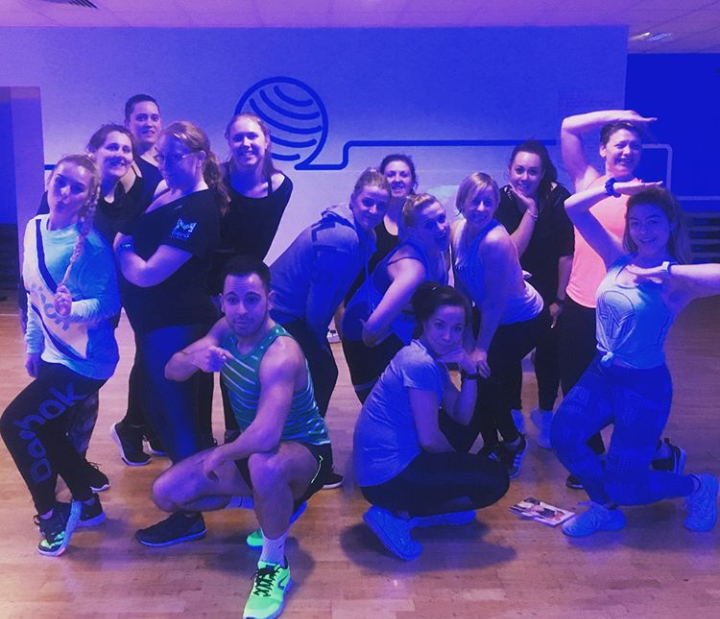
Today was my first time teaching a group exercise class for over 3 weeks.

Group Cycle.

I have trained over those thee weeks of course, but with much less intensity and frequency than normal.

Everyone in the class was in pretty much the same boat.  Everyone trains several times a week and did some exercise over Christmas but took their foot off the gas for a bit and had a well deserved rest.

We all hurt during hat class today!

Physically and mentally it felt tough great to be back but definitely a shock to the system.

To be honest by next week we will all probably be back to normal and whilst classes always feel hard we won’t feel like we did today (basically we all were pretty much ready to stop by the half way point!), because you don’t loose your fitness with a three week recovery.

My point.

If you are a regular class / gym goer heading back after the Christmas break don’t stress.  A break (whether it was total or a reduction to your normal routine) is good for you every now and then.  It can reignite your enjoyment and let your body recover and whilst the first couple of sessions back might feel hard ultimately performance can improve when you allow yourself adequate recovery time.  We all had a laugh today about how knackered e felt and adjusted our intensity to alow us to get the session done.

If you are new.  Hopefully what I’ve just said above will help you relax.  Those people you see in classes or the gym who know what they are doing – I can almost guarantee they will be struggling to get back to it after Christmas – so if you are exhausted 10 minutes into a class that’s ok – at this time of year you are honestly not on your own with that – even the instructors are feeling the same as you!

The other good bit of news is that just as getting back into the swing of things happens quicker than you think it will, so can starting to feel results when you first start.  Of course I am not suggesting that you’ll reach your goal within weeks – it does not work like that but will the things that at first make you feel impossible start to feel a bit more manageable within a few weeks? With a consistent approach yes.

To everyone coming back to classes / gym sessions / their normal routine this week do not beat yourself up about taking that break or feeling more knackered than normal in the first few sessions.

“SMART START” What the new person needs to know – Group Exercise

  1. Nobody will be looking at you. You will find that everyone in classes will be focusing on themselves so you don’t need to be self conscious about what you are doing.
  2. It doesn’t matter if you have two left feet. If you are moving you will burn calories even if you go in the wrong direction or use the wrong foot first.
  3. You don’t have to do the whole class first time. If you aren’t sure you can do the whole class straight away speak to the instructor – we will be happy for you to give it a try and leave after a few tracks if that feels right for you – you can keep building up how you long you stay for over a few weeks.  Some exercise programmes have specific plans in place for this (for instance Les Mills have SMART START where you can build up how much of a class you do over a few weeks / classes)
  4. Classes tend to look more intimidating than they really are. If you look in on a class it will look like everyone is super fit and coordinated which can put some people off giving them a go.  In reality everyone works to their own fitness levels, limitations and for their own reasons so there is no set standard of fitness or ability required.
  5. There are always options. You don’t have to jump or run or do any particular exercise that you are not comfortable doing – the instructor will always give you alternatives and they will not make the class any less effective or less of a workout if you take them.
  6. Try to arrive early. Just five or ten minutes will do. That gives you time to get set up and speak to the instructor without rushing or getting stressed – this is especially important if it’s a Group Cycle class or Body Pump class (or any other class which requires equipment) as having the equipment set up right here can make the class a lot more enjoyable.
  7. Tell the instructor you are new. We try and look out for new faces but we don’t always manage to pick out everyone new in a busy class. When we know you are new to the class we can make sure you are set up, know what to expect, check for anything we might need to know to make sure we offer particular options that might help you.
  8. Class goers tend to be friendly. Everyone remembers the first class they went to and you’ll find people will be happy to help you set up or give you a hand during class if you need one and the instructor isn’t close by (still go introduce yourself to us though!). If your nervous just give someone a smile or a hello and they will more than likely start chatting.
  9. Take water. You will need it!
  10. Have fun. My favourite thing about group exercise is that an hour moving to music goes so much quicker than an hour in the gym.  Don’t worry about how good you are at what you are doing, have fun a do what you can and hopefully you’ll find that you soon see results without feeling like exercise is a chore.

What the new gym person needs to know

  1. Nobody is judging you. We were all new once and only dicks take the piss out of new people in a gym- the rest of us take the piss out of those dicks (not new people).
  2. Most people in a gym are not experts so don’t assume what that person in the corner who looks like a pro is doing is ‘right’.
  3. There is no one way to train so don’t worry if people are doing different things to you.
  4. If you aren’t sure how to do something ask a member of gym staff.
  5. Book in for an induction – gyms are a lot less scary when you know how the equipment works.
  6. Get a programme if your gym membership offers it- it will give you a good starting point.
  7. Try classes. They can be a great place to start if you aren’t really sure about the gym itself.
  8. Smile at people. Gym regulars tend to be a friendly bunch and we don’t think it’s weird talking to people we’ve never met in the changing rooms.
  9. If you aren’t keen on the first thing you try try something else – there will be something you enjoy and that will be the best way for you to get results.
  10. You don’t need to train every day. If you currently never exercise doing something once a week is a 100% improvement on your activity levels. You will still see results – it doesn’t have to be seven training sessions a week or nothing.

What Should I Wear To The Gym?

Simple answer.

Whatever you feel comfortable in.

And that answer is fine if you spend a lot of time training and know what does and doesn’t work for you.  This blog isn’t for you though.

Because that answer isn’t very helpful if you are thinking about starting some form of exercise in the New Year and really don’t know what to wear.  Then it’s just another obstacle to getting started.  I know because years ago when I was overweight and knew that I probably needed to do something not knowing what I should wear (and not feeling comfortable in a ton of lycra) was a good enough excuse to keep putting getting started off.

So here’s some tips to get started:

  • You don’t need to spend lots of new kit. If you want to and can afford it and it will make you feel more confident by all means go splurge in Victoria Secrets.  If you’re starting to dip your toe into the water you don’t need to though – go to Sports Direct or Primark and buy a couple of pairs of bottoms, a couple of tops and a couple of pairs of socks (and if youre female a couple of sports bras).  They don’t need to be any fancy materials to start, as long as you feel comfortable and can move about in them they will work to get you started.  As you get more into training and get to decide what you enjoy doing you can then invest in kit that works for that particular sport in time – right now those expensive compression running tops could be a waste of money if you find out that really you much prefer Zumba.
  • You don’t need super expensive trainers. Same as with clothes. Once you settle on a sport or area of training you may wish to invest in certain shoes (lifting shoes, dance shoes, running shoes, cycle shoes) but to start just buy a pair of trainers that are comfortable.  Think about what you are planning on doing.  If you are going to try classes out a trainer with a spin spot on the sole (a circle type mark on the sole will indicate this) can be useful as it allows you to turn on the spot (which you will do in most dance based classes but is also useful in classes such as Body Combat) – most trainers in the ‘studio’ section on a sports store website will have this.  These shoes will also work well if you plan on venturing into the gym.  If you are going to go running look for a trainer in the running section of the store / website- it doesn’t need to be expensive right now.  For cycling classes you may eventually want to be a cycle shoe you can use cleats with but until you know it’s the exercise for you just pick a trainer with a decent sole (very thin soles will make the class a little painful).
  • You don’t need to wear very fitted clothes. Of course you can if that’s what makes you feel good but don’t feel the pressure to go super skimpy lycra clad if that will make you feel self conscious. People wear all sorts of things to the gym from baggy tops to brightly coloured comic strip style leggings so whatever style will make you feel good is the style to pick and if that means covering up or wearing something loose go for it (just try and make sure it’s not so baggy it impedes safe movement / is something you risk tripping up on!)
  • You don’t need to expose lots of flesh. As above, wear what makes you feel good. Some people like wearing shorts or a crop top to train in, others people prefer to wear leggings and vest tops or long sleeve tops – it has nothing to do with how ‘fit’ people are or what their abs look like – it’s just personal preference as to what makes people feel comfortable whilst training so go as covered or uncovered as you wish.
  • Your basic kit shopping list might look something like this:


  • Gym bag (big enough to fit everything in)
  • A sports bra (females) and a comfortable pair of knickers / Boxers
  • Leggings or shorts
  • A comfortable, breathable top (t shirt, vest, crop top) – not something like a jumper because you’ll just be too hot
  • Socks
  • Trainers
  • Hair bobble if you have long hair
  • Water bottle
  • Small towel

Body Combat for Beginners – Reblog

One of the classes I teach is Les Mills Body Combat. This was the class that made me want to become an instructor so I really enjoy teaching it and always encourage gym members to give it a go.

I do get that it can be a bit intimidating for new people the first time they come to class. The moves are fast and the terminology can be confusing! But it’s also great fun and punching a kicking the days frustrations away can be incredibly satisfying!

If you are thinking about trying a class for the first time but are nervous and unsure of what to expect here’s a few things that I hope will help ease those uncertainties and allow you to have a great first experience:

  • It might sound obvious but tell the instructor you are new at the start- it will help you feel relaxed and they will be able to make sure you’re ok throughout the class and will make sure you have a good first experience.
  • There are three formats of the class- an hour class (10 tracks so sometimes it will be shorter as the length of a track can vary depending on intensity), a 45 minute class and a 30 minute class. The tracks in the shorter (express) versions are selected to still ensure you get maximum benefits from the class despite the shorter time frame.
  • Body Combat is mixed martial arts inspired. You will experience tracks based on a variety of martial arts throughout the class as well as incorporating some MMA (Mixed Martial Arts) training.
  • Don’t worry it’s non – contact. You will be punching and kicking an imaginary opponent or bag (so the air really!)
  • You don’t need any equipment – just you, your gym kit and trainers (and some water!)
  • The moves are choreographed to the music but don’t worry if you aren’t great at following a beat at first- you will still be getting your heart rate up even if you don’t get every combination of moves straight away. Following the music and combinations will get easier and when you do nail that combo to the beat you feel amazing!
  • You are mirroring the instructor’s movements. If they say right foot forward, they will put their left foot forward so if you imagine they are your reflection in a mirror and mirror their moves you will find you are soon putting your right foot forward without even having to think about it! Don’t worry if you new to group exercise we know this takes time to get used to!
  • Once they press play the instructor will generally not pause the music unless you need time to grab a mat. This is to keep the heart rate and intensity of the workout high. That doesn’t mean you can’t take a break if you need one- listen to your own body – the instructor won’t mind, just come back in when you are ready.
  • It is a tough cardio workout. You are going to burn calories. You will get out of breath- that’s ok it’s why you are there. If you need to take a break take one, grab some water and come back in when you are ready.
  • There are always opportunities to work within your own personal limits. The instructor will give different options throughout the workout to either dial the intensity up or down. So if you don’t want to jump there will always be a move you can do instead that doesn’t involve jumping but still provides lots of benefit. Equally the instructor will be able to guide you in how to improve a move to increase the intensity if you are ready to challenge yourself a bit more.
  • If you are new there is something called Smart Start. Effectively it means you are allowed to stay for a few tracks. When you feel like you have done enough you can leave (make sure you stretch before you leave the gym!) then each time you try the class, see if you can stay for one extra track until you can do the whole class. New exercise classes can be tough, we know that, but you don’t need to be put off from trying them because you aren’t sure you are ready for a full class yet.
  • There is a lot of terminology that may be unfamiliar – jab cross, uppercut, hook, roundhouse kick etc. It might take a while to remember what each move is but don’t worry you can watch the instructor throughout and over time you will start to take on board what each strike is so you can react quickly to cues.
  • When you strike imagine your opponent is your height! The instructor will tell you which body part to aim for with each strike – if you imagine the opponent is your height you will get the most effective workout. Possible.
  • It doesn’t matter if you can’t get your leg to head height when you kick (I certainly can’t!)! You will probably find as you attend more often your kicks will get higher, but the range of your kick will have a lot to do with your flexibility so don’t worry if you can’t kick as high as the person next to you – work within your own range of movement and just challenge yourself to kick a bit higher as time goes on.
  • If you have done martial arts training some of the moves may feel ‘wrong’. Some of the moves in Body Combat are modified to ensure they are safe and effective for a group exercise environment. It’s a martial arts inspired class – not a martial arts class.
  • Combat is an amazing core class. All the moves involve massive work through your core and your instructor will coach you how to effectively work the core throughout the class. So as well as burning lots of calories and increasing your CV fitness you will also find the workout does great things for your waist.
  • If you have a question about a move, go and chat to the instructor at the end of the class. We generally love talking to people and want you to get the most out of the class. If you aren’t sure if you are feeling a move ‘in the right place’ ask and we can spend a few minutes on your technique to ensure the following week you are confident you are getting the most out of that move / track / strike / kick.
  • Instructors get a new track list every three months- at which point they will teach this in it’s entirety for around 6 weeks. After that they will ‘mix’ older tracks into a playlist to keep it interesting for you and keep challenging your fitness levels until they get their next playlist. In other words – you won’t ever get bored.
  • Finally- it’s an exercise class and it’s meant to be fun. Don’t worry if you struggle with a move or aren’t great at certain kick- ultimately it’s all about moving and having fun whilst doing it so try not to take yourself too seriously.

Feel the Fear and Do It Anway – Reblog

On Sunday I travelled down to London to do my Aim 1 (Advanced Instructor Module) in Sh’bam.

Now I can’t dance. I closely resemble a plank of wood attempting to move to the beat (I can hear what I’m supposed to be doing and when, I just struggle to make my body do it when it comes to dancing). So whilst I’ve done the equivalent courses already in Body Pump, Body Combat, CX Worx and GRIT and also my Aim 2 in Body Pump so knew what was coming, I was really really (really really really) nervous about this one.

Added to this, for personal reasons, I wasn’t in the best head space when Sunday arrived and my confidence and concentration was at an all time low.

I won’t go into the ins and outs of what you do on an Aim but in addition to teaching and getting feedback on this particular course you also learn about (and try) various different types of dance, which- in my case- meant spending the whole day trying things I’d never tried before (ballet, contemporary, Jazz…).

I will start by confirming that, as anyone who has ever met me would expect, I did not excel in any of the movements tried. I also managed to completely forget the choreography for my track about 10 seconds in the second time I taught and pretty much fell to pieces.

I spent much of the day feeling really quite uncomfortable.

But I’m glad I did it.

We all like doing things we are good at. We never mind trying things when we are confident they are going to go really well. That’s fine because even if you’re good at something, going on courses such as these and getting feedback can still improve you.

But although I was by far the least able person in the room on this occasion it was probably one of the most valuable Aims I’ve done. Regular readers will know I hate cheesey phrases like ‘step out of your comfort zone’ but on this occasion, this is what I was forced to do. Not just occasionally but for 9 hours straight! I gave so many things a go that just didn’t feel natural or comfortable or easy- and when my attempts went wrong I tried my best to laugh it off.

I will never be a ballerina but learning how to do things that scare you is a skill that can help you in all aspects of your life, not just the gym.

So if you think your rubbish at squats and so fear approaching the squat rack just go and do it. You might still be a bit rubbish afterwards but you’ll be giving yourself a chance to improve at the same time as reducing the mental block surrounding it.

If you want to learn to do a handstand, sod what people think and just start practicing – the worry about what you will look like is normally a lot worse than any kind of response you might actually receive.

I’ll sign off by saying a massive thank you to Laura Turner for putting up with me the whole day and not laughing at my attempts to dance and also all the other Sh’bammers for their encouragement and advice!

10 Things I Wish Someone Else Would Write a Blog About

Because I have zero idea!

  1. How to not to eat EVERY.SINGLE.PIECE.OF.CHOCOLATE.I.SEE.EVER (I’ve just stolen someone elses advent calender chocolate. True story!).
  2. How do people get up on their first alarm? I mean if it’s possible why was the snooze function invented?
  3. How do you put eyeliner on without looking like you’re a member the living dead?
  4. How do Les Mills Instructors learn their releases weeks before launch date? #lastminute.com.
  5. How to stop your laundry basket from overflowing. Seriously as soon as I almost get it empty it’s full again!
  6. Gardening for idiots.
  7. How to flirt without looking like you’re having some kind of fit.
  8. What to do with protein powder you really don’t like the taste of but have purchased 4 million kilos of.
  9. How to get bendier when you are built out of the least bendiest thing you can think of.
  10. How to use the toasters when you go down to breakfast in a hotel (they scare me).

If you have written a blog about any of these please point me to it!

My Guide to Body Pump – Re-Blog!

I wrote this back in April but it’s all still relevant so if you are looking to start Body Pump have a read!

If you have ever looked into taking a class at your local gym chances are you will have seen Les Mills Body Pump on the timetable.

It is probably the most successful group exercise programme in existence. I love teaching it and still take it as a participant once a week.

Done regularly with challenging weights it will give you results.

Most people who want to lose weight / tone up do lots and lots of cardio. Cardio is good for you BUT you also need to do some resistance work to shape your body. Body Pump is great because it works the whole body in 30-60 minutes using a low to medium weight and a LOT OF REPS – all whilst moving in time with some good music. If you have never used a barbell before it is also a safe introduction into some basic lifts / moves.

However if you have never used weights before it can also feel a bit intimidating. I remember my first class and the confusion at everyone collecting lots of different sized plates and changing them quickly in between tracks and my bemusement at how everyone seemed to know what move was coming next!

So this is my ‘what you need to know’ guide to taking your first Body Pump class:

  • Arrive at least 10 minutes early and introduce yourself to the instructor so they can help you set up and so they know that you are new. This can help them tailor their teaching, ensuring you have a good first class.
  • Stick with light weights for your first couple of classes and concentrate on getting the hang of the tempos and the moves. Body Pump works because you are doing large numbers of reps, so whilst you want to use a challenging weight eventually, it’s ok to start off light – 3.75kg each side might be a good starting point for most.
  • The instructor will give you a guide of what to put on the bar at the start of each track (e.g. double the weight, take 1/3 off etc.). Listen carefully to this – they will normally give two options – one for regulars, one for new people but do not be afraid to stick with the same weight all the way through on your first class.
  • The structure of every class will always be the same:

60 minutes

  1. Warm up
  2. Squats
  3. Chest
  4. Back
  5. Triceps
  6. Biceps
  7. Lunges
  8. Shoulders
  9. Core
  10. Cool down

45 minutes

  1. Warm up
  2. Squats
  3. Chest
  4. Back
  5. Lunges
  6. Shoulders
  7. Core
  8. Cool down

30 minutes

  • Warm up
  • Squats
  • Chest
  • Back
  • Core

So when the whole class looks like they know what is coming they do for a reason-

and after a couple of classes you will too!

  • Talking of continuity – we get a ‘new release’ every 3 months. So at that point, every instructor will teach this new set of tracks for 4-6 weeks. That is why when you do your first class some people will look like they know what is coming – they have probably done the track lots of times before! After about 6 weeks, the instructor will probably start to ‘mix’. This means they will bring back some older tracks to keep things interesting and keep your body reacting well to the class.
  • As a new member, you can take advantage of something called Smart Start. This means that if you want to try a few tracks (we suggest up to the back track) and then leave you can do. Leave your stuff out and the instructor will put it away at the end of class. Then next week you can stay for a couple of extra tracks, and a few more the week after until you can do a whole class. This is optional and you can stay for the whole class if you want, but it does provide an option to try the class out and build up week by week if you are new to exercise.
  • With Body Pump technique is more important than weight so don’t worry too much at first about what you are lifting – instead work on getting the moves. Doing them well will bring better results than just picking up a heavier bar!
  • The tempo is also really important in Body Pump. You will hear the instructor ask you to move at different tempos (3/1, 2/2, bottom half pulses). These aren’t just to make it more interesting. The different tempos help to work different muscle fibres and maximise your results so try to work with the instructors pace.
  • You aren’t moving or jumping (well occasionally you might be jumping but rarely!) but you will sweat and you will get out of breathe. Body Pump will burn calories as well as shaping your body.
  • Don’t be worried if you wake up the next day and climbing the stairs or tying your hair back hurts! This is your body reacting to new training and will pass in a few days. After a few classes your body will take less time to recover!
  • If you have done weights in the gym before you may be confused by a couple of the moves we do in Body Pump! Be aware that some moves (Deadlifts for instance) are modified for the studio environment. This is for safety reasons as a) we move at a fast tempo and b) the instructor needs to make sure a large group of people are all moving safely.

I hope that the above tips have made the idea of trying a class less daunting! If you do decide to give the class a go, I would love to hear your thoughts!

Twenty Things All Les Mills Instructors Will Know – Updated and 100% new content (take that 80% new content Advanced Training)

  1. The words Recommended and Required mean different things.
  2. Les Mills have Live Chat- when did that happen!?
  3. You won’t need to do 2 touchpoints a year if you fall out of a tree and break your leg whilst rescuing your cat in December.
  4. Yes, that appears to be the only example of special circumstances anyone of Facebook can imagine.
  5. Other than that you do.
  6. Except maybe you don’t.
  7. It’s complicated.
  8. But Tribal Gatherings do still count as a Touchpoint for all your programmes.
  9. Yes even if you don’t do that programme on the day.
  10. Maybe check on Facebook though just in case?
  11. Talking of Tribal Gatherings – Combat and Step will apparently always clash.
  12. Body Balance will always be on at the crack of dawn.
  13. This is just the law now. Like wearing Reebok is #thankyoureebok
  14. Future instructors will one day know of Aim 1 and Aim 2 in the same way I know of actual physical copies of releases – a mythical thing people more experienced that me reminisce about! I mean imagine waiting for the postman to deliver your DVDs!
  15. We will now do Advanced Training.
  16. Advanced Training is quite pricey though so Black Friday probably definitely needs to happen!
  17. Advanced, Elite – does anyone now know how the hierarchy works?
  18. Nobody knows how Tribe Coaches will be made now – can we cope with this much change in one go?
  19. But the portal seems able to cope with quarterly bookings this time round – what will we talk about on Facebook?
  20. Ahhh Virtual- we will talk about Virtual.

*Note this is intended as a tounge in cheek look at recent developments in the world of the Tribe and not intended to be taken too seriously!

How to Travel and Train

Travelling can throw you off your training routine, whether it be for a holiday abroad or at home or a short break or work trip.

However, there are a variety of ways you can keep active whilst travelling: 

  • Hotel Gyms

Many hotels now have gyms – albeit the quality of equipment can vary from a full gym worth of equipment to a couple of pieces of cardio equipment and a single dumbbell.  If you are staying in a hotel with a gym then taking your gym kit and an open mind can be one option.  You may be able to get an idea of what equipment the facility has from their website beforehand so you can plan a workout ahead of time, but if not you can probably work with what is there to keep moving- even if it means departing from your normal routine.     

  • Running

Free and something, you can do anywhere.  Often if I’m staying overnight, in a hotel I’ll just take my running gear and go for a 15-20 min run in the morning.  No checking gym opening hours required so you can fit it to whatever your schedule is.  The added bonus is running somewhere different to usual can be interesting – a run around the city’s sights or along the beach is often more inspiring than running round your local park (or for me down the local cycle paths) and the fresh air first thing can set you up for he day.

  • Yoga

Something which you can do in even the smallest of hotel rooms without worrying about people complaining about you jumping up and down and making noise!  If you already practice yoga you can probably run through your own sequences of moves but if you need inspiration, You Tube has lots of free guided yoga sessions which you could follow.

  • Virtual Services

There are lots of workouts you can do from home now- think Les Mills On Demand and Beach Body.  Some of these require equipment but plenty do not.  If you travel a lot it could be worth a subscription so you can workout in your hotel room when you are away.  If you don’t travel that often many services offer week long trials for free which you could utilise whilst on holiday.

  • Local Gyms

A great option to consider – especially if you are travelling in the UK.  Check if your current gym membership allows you access to any gyms in their chain, as you may be able to access without additional charges.  If not gyms such as The Gym Group and Pure Gym tend to do day and week pass options / trials for less than a tenner.  The benefit here is you can pretty much guarantee the gym will have all the equipment you need to stick to your normal workout routine without having to make changes.  You may even be able to get to a few classes if that floats your boat.  I did this when I went to my mums last Christmas – visiting the local Nuffield (I have a Nuffield membership) on Christmas Eve and then getting a day pass for The Gym on Boxing Day.  Managed to get my workouts in for an extra £7 without having to make any adjustments to what I wanted to do.

  • Body Weight Workouts

You can put together an entire cardio and / or resistance workout using body weight only (think push ups, burpees, lunges, squats, jumping, plank work).  This can be done indoors or outdoors to suit you.  I’m quite keen on short bursts of running (say 500m) with sets of jump lunges, squat jumps, burpees and press ups performed after every run- gives you a quick all over workout and lets you take in some fresh air. If space is tight you could focus on core stability moves and work the trunk of the body, taking out impact work.

  • Tabata

My favourite HIIT tool- 20 seconds on, 10 seconds rest x 8.  You can do any moves you want.  7 rounds gives you about a thirty minute workout which will elevate the heart rate.  The ability to do any moves means you can do it anywhere with any equipment you have or just your body.  Type tabata timer into the app store and you will find lots of timers you can use.

  • Tennis / Golf

If you are on holiday abroad there will often be tennis courts or similar at your hotel.  Getting involved in some sports whilst you are away is a great way of getting exercise in – beach volleyball, tennis, golf- without really thinking about exercising.

  • Sight Seeing

Walking might seem less intense than your normal training sessions. But if you are on holiday and planning on visiting lots of sites remember that the walking you do will count towards keeping moving, so perhaps you want to leave the gym kit at home and just get in lots of steps whilst away.

  • Rest

If you travel all the time finding a system for training whilst away is a good idea.  However, if you are only away for a week or two on holiday there is no harm in deciding to just take a break from training completely.  This could be the perfect time to let the body rest so you are eager to go again upon your return.

I would love to hear other people’s ideas and methods of staying active whilst on the move.